



Pickleball doubles is a fast-paced, strategic game that requires precise teamwork, quick decision-making, and intelligent shot selection. Among all the shots in pickleball, dinks—soft, controlled shots that land in the kitchen—play a critical role in determining who controls the net, dictates the pace of the rally, and ultimately wins the point.
Many recreational players focus on smashes, drives, or aggressive volleys, underestimating the power of a well-executed dink. Yet, at higher levels, the ability to place consistent, precise dinks is often what separates winning doubles teams from losing ones.
Understanding Pickleball Dinks
What Is a Dink?
A dink is a shot executed with a soft touch, designed to land in the opponent's kitchen (non-volley zone) without bouncing out of bounds. Key characteristics include:
- Low trajectory: Keeps the ball just above the net, making it difficult for opponents to attack
- Controlled pace: Slows the rally and forces opponents to react rather than initiate
- Targeted placement: Often aimed at the corners or near the opponent's feet to create openings
How Dinks Differ from Other Shots
|
Shot Type |
Purpose |
Typical Placement |
Characteristics |
|
Dink |
Control, positioning |
Kitchen line |
Soft, low, precise |
|
Drive |
Attack |
Mid-court or baseline |
Fast, direct, powerful |
|
Volley |
Net play |
Anywhere near net |
Harder than dink, can end rally |
|
Smash |
Finish |
Overhead, opponent court |
High power, aggressive |
Unlike drives or smashes, dinks are not intended to win the point outright; their primary purpose is to control the flow of the game and create scoring opportunities.
Rules Affecting Dinking
- You cannot volley in the kitchen—you must let the ball bounce first.
- Proper dinking requires both touch and timing, as any miscalculation can result in hitting the net or sending the ball out of bounds.
- Dinking is most effective when combined with strategic positioning and partner coordination.

Why Dinks Are Important in Doubles
In doubles play, controlling the net is a major factor in winning points. Dinks are the tool that allows teams to maintain positional advantage and force opponents into mistakes.
Controlling the Pace of the Rally
- Dinks slow down fast exchanges, giving players time to reset and position themselves optimally.
- By controlling the tempo, teams can dictate where the ball goes and reduce opponent aggression.
Forcing Opponent Errors
- Well-placed dinks challenge opponents to move quickly and hit upward, increasing the chance of net errors or poorly executed returns.
- Targeting the space between opponents—especially in doubles—can create confusion and mistakes.
Creating Openings for Attack
- Dinks set up third-shot opportunities, where players can follow a soft exchange with a controlled drive or angled volley.
- Repeated soft shots force opponents further back from the net, opening the front court for decisive placement.
Maintaining Positional Advantage at the Net
- Teams that control the kitchen line with consistent dinking force opponents to stay low and defensive.
- Proper dinking keeps both players at the net engaged, reducing open spaces for aggressive shots.
Techniques for Effective Dinking
Mastering the dink requires precision, consistency, and control. Below are the fundamental techniques:
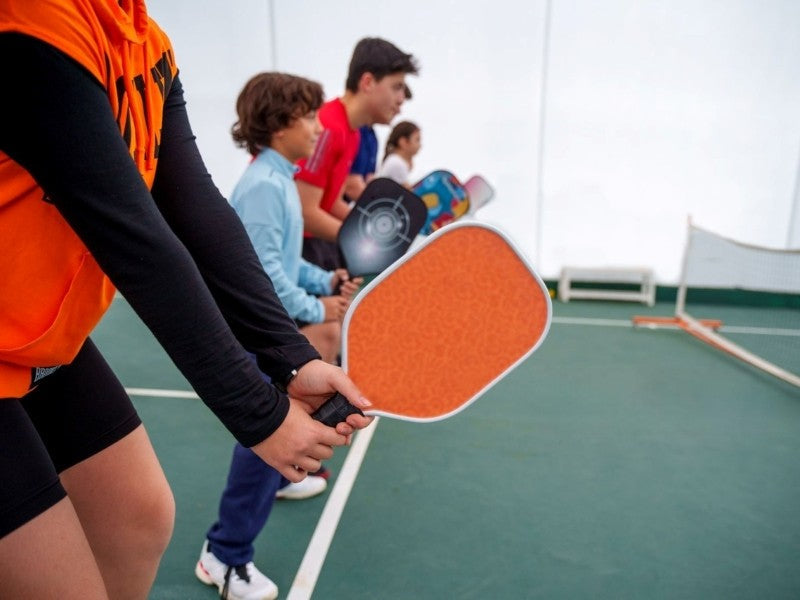
Proper Stance and Footwork
- Feet shoulder-width apart, knees slightly bent
- Weight balanced on balls of feet for quick lateral movement
- Stay low to increase control and reduce overhitting
Paddle Grip and Angle
- Continental grip is often recommended for dinks
- Paddle face slightly open to gently lift the ball over the net
- Maintain a soft wrist and forearm for controlled placement
Wrist and Forearm Control
- Avoid excessive wrist flicking; soft touch comes from controlled motion
- Forearm guides the paddle; the wrist adjusts fine placement
- Small, controlled movements improve consistency
Spin and Placement Variations
- Slight topspin or backspin can make returns harder for opponents
- Placement should aim for corners, feet, or the gap between opponents
- Mixing depth and angle prevents predictability
Common Mistakes to Avoid
- Hitting too hard → sends ball out of kitchen or high for easy attack
- Poor positioning → inability to react to opponent’s counter-dink
- Overuse → predictable dinking pattern that opponents can anticipate
Dinking Strategy in Doubles Play
In doubles, dinks are more than just soft shots—they are strategic tools. Mastering dinking allows a team to dictate points and control the court.
Coordinating With Your Partner
- Communication is key. Decide which side will cover deep shots or the middle of the court.
- Alternate dinks to avoid crowding the kitchen or colliding with your partner.
- Use dinks to force opponents to move, creating gaps your partner can exploit.
Setting Up Third-Shot Opportunities
- Effective dinking can set up a third-shot attack, especially after the serve and return exchange.
- Keep opponents on the defensive, then follow a soft exchange with a drive or angled volley to finish the point.
Controlling Court Position
- Dinks allow you to maintain kitchen dominance, making it harder for opponents to approach the net.
- Vary placement between opponents’ feet, corners, or off-angle shots to prevent them from predicting your next move.
Timing and Shot Selection
- Patience is crucial. Avoid rushing aggressive shots before you’ve controlled the kitchen line.
- Mix dinks with occasional drives or lobs to keep opponents guessing.
Common Errors in Dinking
Even skilled players make mistakes when relying on dinks. Awareness can prevent losing points unnecessarily.
Hitting Too Hard or Too Soft
- Overhitting → ball goes out of bounds or too high for easy counterattack.
- Underhitting → opponents easily intercept or step in for a kill shot.
- Solution: practice controlled, consistent touch to maintain accuracy.
Poor Placement
- Hitting directly at the opponent’s body reduces your advantage.
- Always aim for corners, near feet, or gaps between partners.
- Use spin or angles to increase difficulty for the opponent.
Overusing Dinks
- Repeatedly dinking to the same area makes your strategy predictable.
- Combine dinks with drives, lobs, or angled shots to maintain unpredictability.
Ignoring Partner Positioning
- Crowding the kitchen can limit both players’ mobility.
- Maintain spacing and communicate to ensure coverage of open areas.
Frequently Asked Questions
Why do experienced doubles players dink so much instead of hitting harder shots?
In doubles, hard shots rarely win points consistently once all four players reach the kitchen line. Power shots tend to come back just as fast or create unforced errors.
Dinks allow experienced players to:
- Neutralize pace
- Control positioning at the net
-
Force opponents to hit up, increasing error rates
At higher levels, points are usually won through patience and positioning, not raw power
Why do my dinks keep popping up and getting attacked?
This is one of the most common problems among intermediate players. Typical causes include:
- Too much wrist action instead of a controlled push
- Paddle face opening too much at contact
-
Standing too upright instead of staying low
Effective dinks require soft hands, minimal swing, and controlled paddle angle, not finesse alone.
Is it possible to dink too much in a rally?
Yes. Excessive dinking without variation allows opponents to:
- Settle into rhythm
- Anticipate placement
- Look for speed-ups
Effective dinking is not passive. It should include:
- Changes in depth
- Occasional pace variation
- Strategic speed-ups when a ball floats slightly high
Dinking is a setup tool, not an end in itself.
Do pickleball dinks matter as much at recreational levels?
Absolutely. In fact, they often matter more. Recreational players tend to:
- Overhit balls
- Struggle with soft touch
- Make more unforced errors at the net
Consistent dinking immediately creates an advantage, even against stronger or more athletic opponents.
What is the single most important skill to improve dinking in doubles?
Consistency.
Not spin, not deception, not creativity—consistency.
If you can reliably keep the ball low, unattackable, and inside the kitchen, you will:
- Win longer rallies
- Reduce your own errors
- Force opponents to beat themselves
Everything else builds on that foundation.


Leave a comment
This site is protected by hCaptcha and the hCaptcha Privacy Policy and Terms of Service apply.