


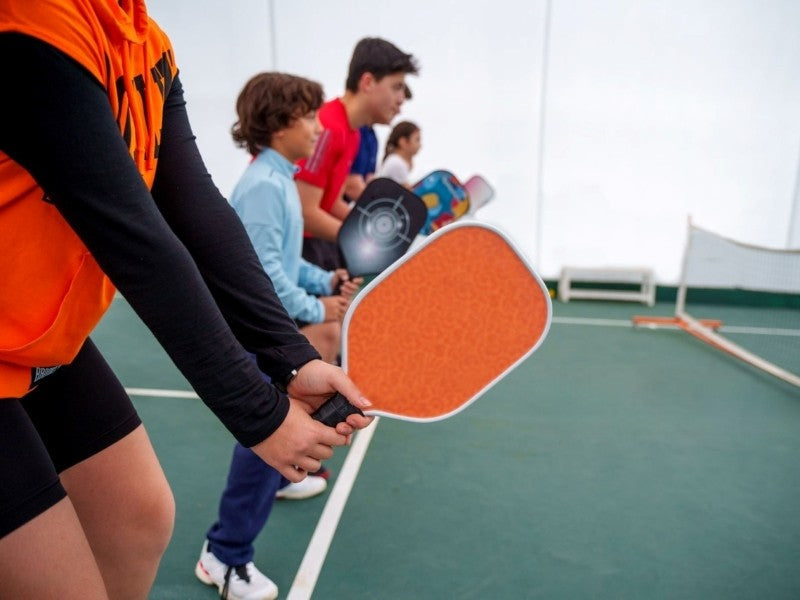
In pickleball, grip choice quietly influences nearly every aspect of performance—control, consistency, reaction time, and even long-term comfort. Yet many players adopt a grip early on without understanding how it shapes their development.
The eastern grip pickleball players commonly use often feels natural, especially for beginners and those transitioning from tennis. However, “comfortable” does not always mean “optimal” in every situation. The real question is not whether the Eastern grip is good or bad, but when it works well, when it becomes limiting, and who benefits most from using it.
What Is the Eastern Grip in Pickleball?
Definition of the Eastern Grip
The Eastern grip in pickleball positions the hand so the paddle face is naturally square to the ball on forehand shots. The index knuckle typically aligns with the flat bevel of the handle, allowing a straightforward swing path and a neutral wrist position.
While similar in concept to the Eastern grip used in tennis, the pickleball version often requires less wrist rotation due to the lighter paddle and slower ball speed.

How to Hold the Paddle Using the Eastern Grip
With the Eastern grip:
- The paddle face stays relatively vertical at contact
- The wrist remains in a neutral, relaxed position
- Forehand strokes feel intuitive with minimal adjustment
Common errors include gripping too tightly or rotating the hand too far underneath the handle, which can unintentionally shift the grip toward a Semi-Western position.
Why the Eastern Grip Feels Natural to Many Players
From an ergonomic perspective, the Eastern grip aligns well with natural arm mechanics. It reduces the need for exaggerated wrist movement and allows players to focus on timing rather than grip manipulation.
For new players still learning footwork, positioning, and shot selection, this simplicity can be a major advantage.
Why the Eastern Grip Is Popular in Pickleball
Accessibility for Beginners
One reason the eastern grip pickleball players often start with is its low learning curve. Beginners tend to make clean contact more consistently compared to more extreme grips, which helps build confidence early on.
Influence from Tennis and Other Racket Sports
Players transitioning from tennis, especially those familiar with an Eastern forehand, naturally gravitate toward this grip. The muscle memory carries over well, allowing faster adaptation to pickleball’s court dimensions and rally patterns.
Compatibility with Pickleball Equipment and Court Design
Pickleball paddles are lighter and have less string-based feedback than tennis rackets. Combined with a slower-moving ball, the Eastern grip provides sufficient control without requiring aggressive grip angles.
Pros of Using the Eastern Grip in Pickleball
Forehand Control and Shot Consistency
The Eastern grip excels at producing reliable forehand shots. Because the paddle face remains square at contact, players experience:
- Predictable ball trajectory
- Reduced mishits
- Improved directional accuracy
This consistency is especially valuable during baseline rallies and controlled returns.
Comfort and Reduced Wrist Strain
Compared to more extreme grips, the Eastern grip places less stress on the wrist and forearm. Players who experience discomfort or fatigue often find this grip easier to sustain during longer sessions.
Versatility for Recreational and Intermediate Play
For recreational and intermediate players, the Eastern grip offers a balance between control and simplicity. It supports a wide range of shots without requiring constant grip changes, making it a practical choice for casual competition.
Cons and Limitations of the Eastern Grip
Despite its advantages, the Eastern grip is not universally ideal.
Challenges at the Non-Volley Zone (Kitchen)
At the kitchen line, reaction time is critical. The Eastern grip can feel slightly restrictive during rapid volleys, as the paddle angle is less adaptable for quick wrist-based adjustments.
Limitations in Fast Transition Situations
During transitions from baseline to net, players using the Eastern grip may struggle to adapt quickly to changing shot demands. This can lead to late contact or compromised paddle angles under pressure.
Backhand Constraints and Transition Shots
One of the most significant limitations of the eastern grip pickleball players encounter is on the backhand side. For players relying on a one-handed backhand, the Eastern grip often requires additional wrist adjustment to maintain a square paddle face. Under pressure, this can reduce shot stability.
During transition shots—such as defensive blocks or half-volleys—the grip may feel slow to adapt, especially when reacting to fast-paced net exchanges.
Reduced Spin and Angle Creation at Higher Levels
While the Eastern grip supports clean, flat contact, it can limit the generation of advanced topspin and sharp angles. At higher levels of play, opponents exploit predictable shot trajectories, making grip versatility more valuable.
Players seeking aggressive spin-based strategies often find the Eastern grip insufficient without frequent grip adjustments.
Eastern Grip vs Other Common Pickleball Grips
Eastern Grip vs Continental Grip
The Continental grip is often considered the most versatile option in pickleball.
· Eastern Grip:
- Strengths: Forehand control, comfort, consistency
- Limitations: Net speed, backhand flexibility
· Continental Grip:
- Strengths: Fast net exchanges, volleys, dinks
- Limitations: Steeper learning curve for forehands
For players who spend significant time at the kitchen line, the Continental grip may offer faster reaction and better paddle face adaptability.
Eastern Grip vs Semi-Western Grip
The Semi-Western grip favors topspin and aggressive baseline play.
- Eastern grip supports flat, controlled strokes.
- Semi-Western grip enhances spin but demands precise timing and wrist engagement.
Pickleball’s lower bounce and smaller court reduce the advantage of heavy topspin, making Semi-Western grips less practical for many players.
When Grip Switching Becomes Necessary
As players advance, sticking to a single grip can become limiting. Situational grip changes—such as shifting toward a Continental grip near the net—often improve adaptability without abandoning the Eastern grip entirely.

When the Eastern Grip Works Best (Use Cases)
Beginners Learning Stroke Fundamentals
Beginners benefit from the Eastern grip’s simplicity. It allows players to focus on footwork, positioning, and shot placement rather than grip complexity.
Tennis Players Transitioning to Pickleball
Tennis players familiar with the Eastern forehand often adapt quickly to pickleball using the same grip. This continuity reduces the learning curve and supports consistent contact.
Control-Focused and Baseline-Oriented Players
Players who prioritize consistency over power and spin often find the Eastern grip effective for sustained rallies and controlled returns.
Frequently Asked Questions About Eastern Grip Pickleball
Is the Eastern grip good for pickleball beginners?
Yes—for many beginners, the Eastern grip is one of the easiest to learn.
It feels natural, especially for players with a tennis background, and allows solid forehand control early on.
However, beginners should understand its limitations:
- Less forgiving at the net
- Requires grip adjustments for volleys and dinks
It works best as a starting grip, not necessarily a long-term solution.
Why do I struggle with volleys and dinks using the Eastern grip?
The Eastern grip favors forehand drives more than soft net play.
At the kitchen line, it can:
- Open the paddle face unintentionally
- Make backhand volleys feel rushed
- Reduce reaction speed
What helps:
- Slight grip rotation toward a continental position at the net
- Looser grip pressure during dinks
- Shorter, more compact swings
Many players use a hybrid grip approach rather than one fixed grip.
Do advanced pickleball players use the Eastern grip?
Some do—but rarely as a full-time grip.
Advanced players often:
- Use Eastern grip from the baseline
- Shift toward continental grip at the net
- Adjust grip subtly between shots
The key difference is adaptability, not grip loyalty.
Should I switch from Eastern to Continental grip?
You should consider switching if:
- You struggle with fast volleys
- Your backhand feels unstable
- You feel late on reaction shots at the kitchen
However, switching grips too early can hurt confidence.
Recommended approach:
- Keep Eastern grip on groundstrokes
- Gradually introduce continental grip during net drills
- Allow time for muscle memory to adapt
Does grip choice really affect consistency that much?
Yes—especially in pickleball.
Because the court is small and reaction time is limited, grip choice affects:
- Paddle face angle
- Speed of adjustment
- Margin for error at the net
The “best” grip is the one that:
- Supports your most frequent shots
- Reduces rushed adjustments
- Feels stable under pressure
What’s the biggest mistake players make when choosing a grip?
The biggest mistake is assuming one grip must work for every situation.
Pickleball rewards flexibility. Grip choice should adapt to:
- Shot type
- Court position
- Rally speed
Rigid grip habits often limit long-term development.
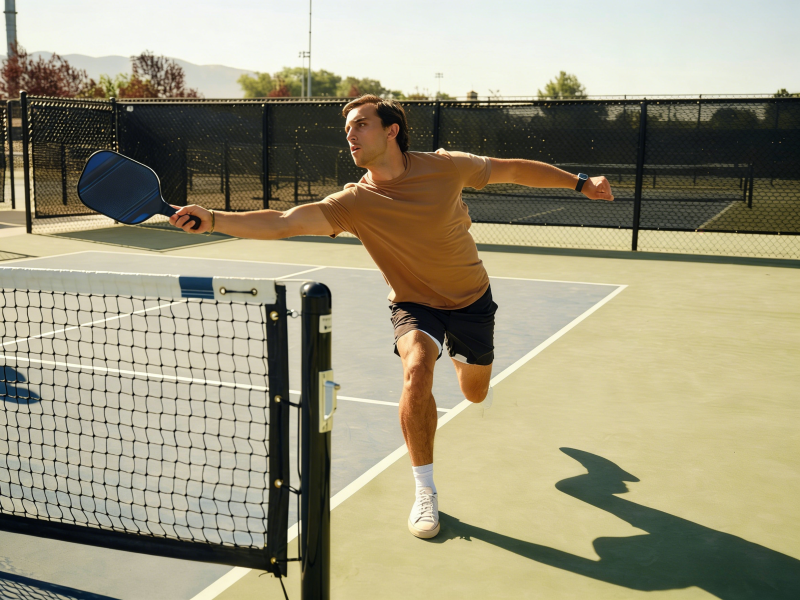


Leave a comment
This site is protected by hCaptcha and the hCaptcha Privacy Policy and Terms of Service apply.