


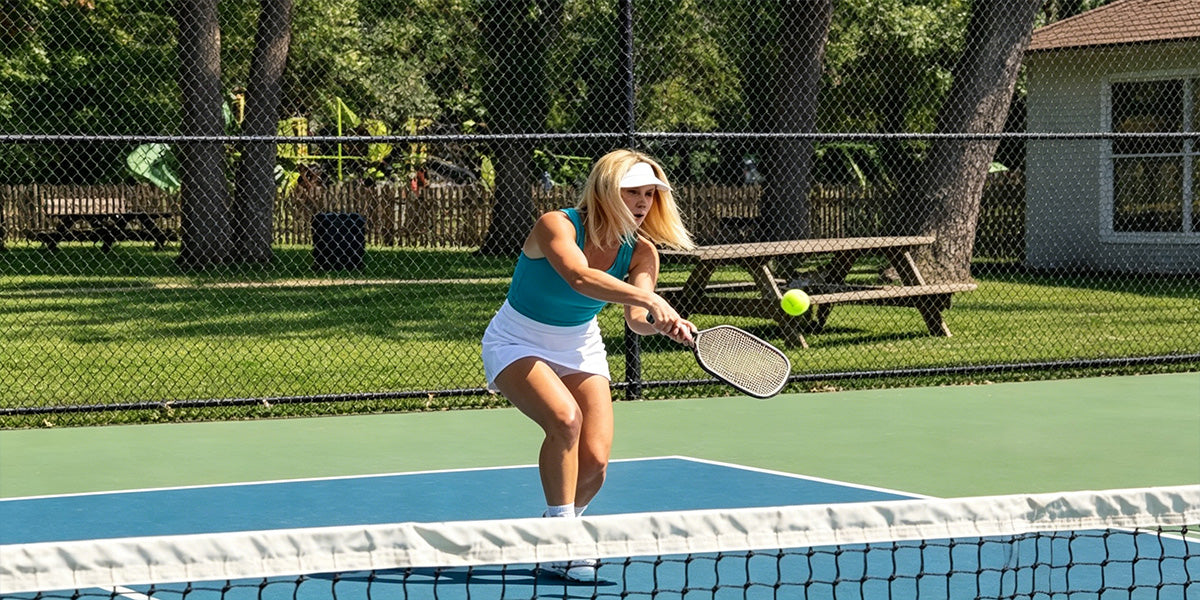
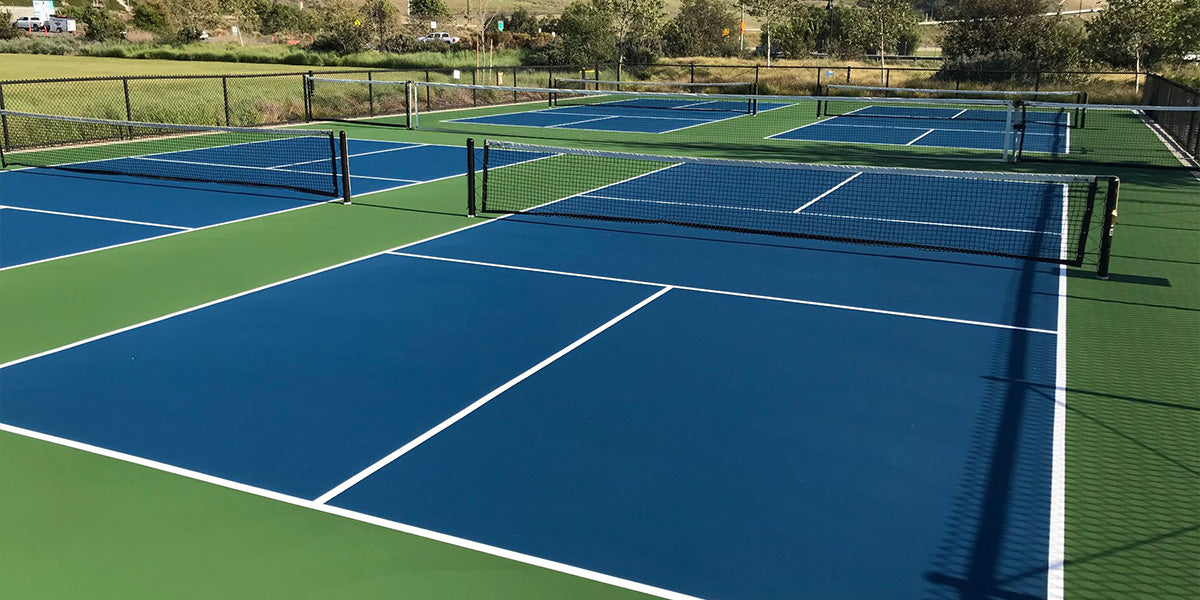
Pickleball is a paddle sport that combines elements of tennis, badminton, and table tennis. It is played on a court roughly the size of a badminton doubles court (20×44 feet). Players use solid paddles—larger than table tennis paddles but smaller than tennis rackets—to hit a perforated plastic ball over a net. The net is set at 36 inches at the sidelines and 34 inches in the center, similar to tennis. The sport is easy to learn, low-impact, and suitable for all ages and skill levels.
Pickleball officially started in 1965 on Bainbridge Island, Washington. It was invented by three fathers—Joel Pritchard, Bill Bell, and Barney McCallum—who sought a way to entertain their families. By combining elements of tennis, badminton, and ping-pong, they created a sport that has now become a global phenomenon.
While the game began as a simple backyard solution for a bored summer afternoon, it has evolved into a professional industry. Today, understanding the history of pickleball is more than just trivia; it’s about seeing how the sport's roots in accessibility and fun have driven the massive demand for high-quality, performance-driven gear that we see in the market today.
The Origin Story: A Saturday in 1965
It was a Saturday in the summer of 1965 on Bainbridge Island, Washington. Three dads—Joel Pritchard, a U.S. congressman; Bill Bell, a successful businessman; and Barney McCallum, a handy neighbor and skilled craftsman—had just returned from a round of golf. Their children were bored, complaining there was “nothing to do on the island.”

Looking for a way to keep everyone entertained, they spotted an old badminton court in Pritchard’s backyard. But there was a problem: no badminton rackets. So they grabbed what they had—table tennis paddles and a perforated plastic ball (which happened to be a child’s birthday gift). They started hitting the ball over the badminton net, which was set at the standard 60 inches high.
Soon they realized the plastic ball bounced beautifully on the asphalt surface. So they lowered the net to 36 inches—about the height of a tennis net. The game became more fun and much easier for both adults and kids.
That same weekend, Barney McCallum fully joined in, and the three men began writing down the first official rules of what would later be called pickleball. What started as a simple solution to bored children quickly turned into a familyfriendly tradition.
Two years later, in 1967, the first permanent pickleball court was built—right in Pritchard’s backyard, with help from neighbor Bob O’Brian.
Why Is It Called “Pickleball”?
The name “pickleball” has two popular stories behind it. One is true. The other is a fun misunderstanding.

The True Origin: The Pickle Boat
Joan Pritchard, Joel Pritchard’s wife, came up with the name. She was a competitive rower and knew the term “pickle boat.” In crew racing, a pickle boat is a boat made up of leftover rowers from other teams—basically a “mixed” crew. She thought the new game was like that: it borrowed elements from tennis, badminton, and table tennis all mixed together. This is the official explanation recognized by USA Pickleball.
The Popular Myth: Pickles the Dog
Many people believe the game was named after the Pritchard family’s dog, Pickles. The story goes that Pickles loved to chase the ball and would run off with it. It’s a cute story, and it spread quickly through newspapers and TV interviews.
But here’s the truth: Pickles the dog was born in 1968. Pickleball was invented in 1965. The dog came three years after the game. In fact, the dog was named after the sport—not the other way around. Joel Pritchard later admitted that the dog story was a joke that got repeated so often it became “fact.”
The Evolution of Equipment: From Plywood to Carbon Fiber
The growth of pickleball can be clearly seen through the evolution of its equipment. In the early days of 1965, there were no specialized pro shops. The very first paddles were hand-sawn from pieces of plywood found in a backyard shed. While these wooden paddles were heavy and lacked "pop," they were enough to get the game started.
As the sport moved into the mainstream, the demand for better performance led to a technological revolution in paddle manufacturing:
- The Wood Era: Durable but heavy, offering little control.
- The Honeycomb Revolution: The introduction of polymer and Nomex honeycomb cores provided a lightweight structure that absorbed vibration and increased power.
- Modern Carbon Fiber & T700: Today, high-end paddles utilize T700 Carbon Fiber and textured friction surfaces. These materials allow players to generate massive spin and provide a much larger "sweet spot" for consistent shots.
While the sport began with humble, handmade wooden boards, the modern player now has access to professional-grade technology. At Srikel, we believe top-tier performance shouldn't come with a "brand tax." That’s why our Aura Series leverages advanced carbon fiber technology to give you a pro-level experience at a much more practical price point.
The Evolution of Pickleball: Key Milestones and Professionalization
Watching a sport grow from a backyard pastime into a global industry is fascinating. To help you understand how pickleball reached its current scale, we have compiled a timeline of the most significant milestones in its history.
- 1965 – Pickleball is invented on Bainbridge Island, Washington, by Joel Pritchard, Bill Bell, and Barney McCallum.
- 1967 – The first permanent pickleball court is built in Pritchard's backyard.
- 1972 – Pickle-Ball Inc. is founded to protect and promote the new sport.
- 1975–1976 – The sport receives its first national media coverage (National Observer and Tennis Magazine).
- 1976 – The first official pickleball tournament takes place in Tukwila, Washington.
- 1984 – The United States Amateur Pickleball Association (USAPA) is formed, and the first official rulebook is published. Arlen Paranto creates the first composite paddle using aircraft flooring material.
- 1990 – Pickleball is played in all 50 U.S. states.
- 1999 – The first pickleball website, Pickleball Stuff, goes online.
- 2001 – Pickleball debuts at the Arizona Senior Olympics, drawing 100 players.
- 2020–2026 – Pickleball becomes the fastest‑growing sport in the United States, with millions of new players and hundreds of professional tournaments.
This rapid professionalization has created a sophisticated market where quality and durability are paramount. For distributors and players alike, this timeline shows that while the fun remains the same, the standards for performance have never been higher.

When Did Pickleball Become Professional?
The professionalization of pickleball is a relatively recent story. While the sport was invented in 1965, it took more than five decades for a true professional circuit to emerge. The consensus answer is: 2019 is the year professional pickleball officially began, with the launch of two competing tours—the Association of Pickleball Professionals (APP) and the Professional Pickleball Association (PPA).
But the journey to that moment started much earlier.
The Early Days: From Backyards to Tournaments
Before there were professional tours, there were tournaments. The first known pickleball tournament was held in 1976 at the South Center Athletic Club in Tukwila, Washington. At that time, pickleball was still very much an amateur activity. Players competed for fun, not for prize money.
For decades, the sport grew steadily through community centers, retirement communities, and recreational clubs. The USA Pickleball Association (USAPA) —the sport‘s governing body—was formed in 2005 to standardize rules, sanction events, and promote the game nationwide. This created the organizational foundation that would eventually support professional play. But even then, there were no full-time professional players earning a living from the sport.
The Turning Point: 2019
Two organizations launched in 2019 that changed everything:
Association of Pickleball Professionals (APP) – Launched in June 2019, the APP Tour became the first USA Pickleball-sanctioned tour for both professionals and amateurs. It was designed to be inclusive, offering opportunities for players at all levels while providing a legitimate pro circuit at the top.
Professional Pickleball Association (PPA) – Also launched in 2019 (with some sources tracing its founding to late 2018), the PPA took a more elite, professional-focused approach. It signed top talent like Ben Johns and Anna Leigh Waters, offered significant prize money, and positioned itself as the “big leagues” of pickleball.
The PPA was started by Connor Pardoe, who was just 23 years old at the time. With his family’s financial backing, he launched the tour with eight events in its first year.
Together, these two tours marked the official birth of professional pickleball.
Prize Money: The Hallmark of Professional Sports
A key indicator of professionalization is prize money. In 2019, champions at the USA Pickleball National Championships took home just $2,500 from a total prize pool of $80,000.
By 2021, the APP Tour‘s total prize purse had grown to $700,000 across 18 tour stops. The PPA was also growing rapidly—by 2022, it hosted 20 events and distributed over $3 million in player compensation.
As of 2024–2025, top professional pickleball players now earn millions. World No. 1 Ben Johns reportedly makes $2.5 million per year, while Anna Leigh Waters has become the sport’s highest-paid athlete at $3 million annually, combining prize money and endorsement deals. The United Pickleball Association (UPA)—formed from the 2023 merger of MLP and PPA—has allocated a projected $31 million per year in total player earnings.

Major League Pickleball (MLP) and the Future
In 2021, Major League Pickleball (MLP) introduced a team-based format to professional pickleball, attracting celebrity investors and further legitimizing the sport. In 2023, MLP and the PPA Tour merged, backed by a $50 million investment, to unify the professional scene under the United Pickleball Association (UPA).
Today, professional pickleball is firmly established. In 2024, the combined leagues hosted 188 tournaments—a 300% increase year-over-year. Matches are broadcast on CBS, Fox Sports, ESPN, and other major networks. Prize money continues to grow, and players can now make a legitimate living from the sport.
Why Is Pickleball Exploding in Popularity Today?
If you feel like you’re seeing pickleball everywhere lately, you aren’t imagining it. While the sport has been around since 1965, its transformation from a niche backyard game to a global mainstream phenomenon in the 21st century is backed by staggering data.
The Numbers Behind the Growth
According to the Sports & Fitness Industry Association (SFIA), pickleball participation has grown by 158.6% over the last three years, officially making it the fastest-growing sport in North America. To put that in perspective:
- Infrastructure: In 2003, there were only 39 known places to play in North America. By 2008, that number grew to 420, and today, there are thousands of dedicated facilities and converted tennis courts.
- Player Base: By 2021, the U.S. reached approximately 4.8 million players, a number that continues to climb as the sport moves into international markets.
- Search Trends: Google searches for "pickleball" have surged by 219% over the past five years, reflecting a massive spike in consumer interest.
What is Driving the Trend?
The "secret sauce" of pickleball’s success lies in three practical factors:
1. Low Barrier to Entry: Unlike tennis, which can take months to master, most people can learn the basics of pickleball in a single afternoon. It is physically less demanding but highly engaging, making it accessible to everyone from kids to seniors.
2. Social Connectivity: The smaller court size allows for constant conversation. It is a highly social sport that fosters community, which became a vital need for people looking for safe, outdoor ways to connect during and after the pandemic.
3. Professionalization & Media: Since the launch of professional tours like the APP and PPA in 2019, the sport has gained significant media coverage. Major networks like NBC began calling it "the fastest-growing sport in America" as early as 2013, and that momentum hasn't slowed down since.
Bottom line: Pickleball didn’t go viral by accident. It’s easy, social, outdoorfriendly, and genuinely fun. The pandemic gave it a push, but the sport’s own qualities keep it growing. And by most indicators, that growth is far from over.
The Future of Pickleball
Will pickleball ever become an Olympic sport? As of 2026, the answer is no—pickleball is not currently on the Olympic program and will not be included in the 2028 Los Angeles Games. In October 2023, the IOC approved cricket, baseball/softball, flag football, lacrosse, and squash for 2028. Pickleball was not selected.
However, the sport is moving in the right direction. The Global Pickleball Federation (GPF) has entered the formal process for IOC recognition. A GPF delegation traveled to Lausanne, Switzerland—the home of the International Olympic Committee—to meet with stakeholders and begin the compliance process. The GPF now has 67 member countries and is actively building the legitimacy the IOC requires for consideration. In 2025, the International Pickleball Federation and World Pickleball Federation merged into a unified global body, further strengthening pickleball‘s Olympic case. Typically, a sport needs at least 60 approved national federations across three continents to apply for Olympic recognition.
Meanwhile, pickleball continues to explode globally. The sport now has over 50 million players worldwide, making it the fastest‑growing sport across the US and increasingly popular in Asia and Europe. Over 20 million play in the U.S. alone, with rapidly rising numbers in Canada (1.54 million), Europe, India, Japan, Singapore, and Australia. Asia holds the most promise for pickleball’s next boom, with an estimated 812 million people across the region having played at least once.
The earliest realistic chance for Olympic debut is 2032 in Brisbane, Australia, especially since host cities can propose new sports for their own Games. The Olympics may still be a few cycles away, but pickleball’s global future has never looked brighter.
For players and distributors, the future of pickleball is about standardization and innovation. As the sport goes global and aims for the Olympics, the demand for "tournament-ready" equipment—paddles with precise weight distribution, consistent surface grit, and extreme durability—will skyrocket.
At Srikel, we are excited to be part of this journey. Just as the founders in 1965 sought to bring people together, we are committed to providing the high-performance gear that will power the next generation of players on the world stage.


Leave a comment
This site is protected by hCaptcha and the hCaptcha Privacy Policy and Terms of Service apply.