
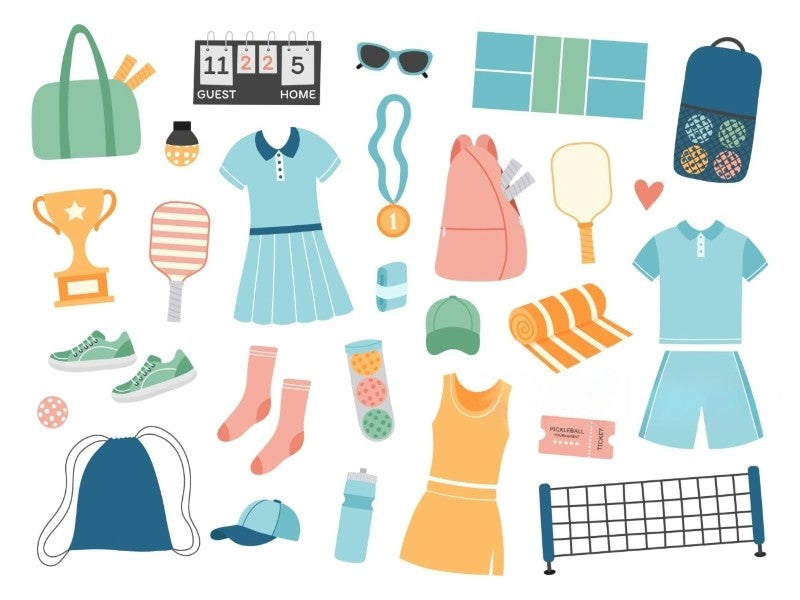
One of the main reasons pickleball has grown so quickly is its low barrier to entry. Compared with many racket sports, it is relatively easy to start playing. However, this accessibility often leads to confusion—especially online—about what equipment is actually required versus what is merely helpful.
Understanding the items needed for pickleball is not about minimizing preparation; it is about making informed, practical decisions. The right setup helps players focus on learning the game, improving consistency, and avoiding preventable discomfort or injury.
Required Items Needed for Pickleball (Non-Negotiable Essentials)
The following items form the foundation of pickleball. Without them, meaningful play is not possible.
Pickleball Paddle
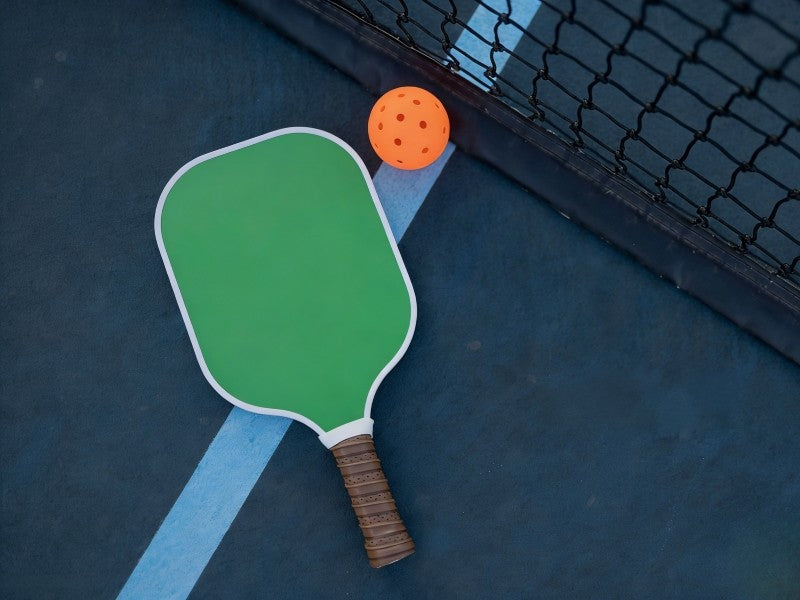
A pickleball paddle is the single most essential piece of equipment in the sport. Unlike tennis or badminton, there is no shared alternative or substitute—each player must use a paddle designed specifically for pickleball.
From a functional standpoint, a paddle must:
- Meet size regulations
- Provide sufficient control for short-court play
- Withstand frequent contact with the ball and occasional contact with the court
For beginners, the most common mistakes are not related to brand or price, but to misaligned priorities. New players often assume that advanced materials or high power will improve performance, when in reality:
- Excessive stiffness reduces touch and control
- Overly heavy paddles increase fatigue and timing errors
- Complex designs add no benefit without solid fundamentals
At the entry stage, consistency and forgiveness matter far more than raw power. A basic, regulation-compliant paddle is fully sufficient for learning proper technique and court positioning.

Pickleball Balls
Pickleball uses a unique perforated plastic ball that behaves very differently from balls used in other racket sports. Using the correct type of ball is not optional—it directly affects bounce, speed, and shot predictability.
There are two primary categories:
- Indoor balls: lighter, fewer holes, softer feel
- Outdoor balls: heavier, more holes, designed to resist wind
Using the wrong type of ball creates immediate problems:
- Indoor balls outdoors become unstable in wind
- Outdoor balls indoors feel overly fast and harsh
- Incorrect bounce height disrupts timing and footwork
Another important reality is durability. Pickleball balls are consumable items. Over time, they can:
- Crack
- Lose shape
- Develop inconsistent bounce
For this reason, having more than one ball available is not a luxury—it is a practical necessity, especially in open play settings.
A Proper Court and Net (or Reliable Access to One)
A regulation pickleball court includes:
- Defined boundary lines
- A non-volley zone (“kitchen”)
- A net set to the correct height and tension
However, players do not always need to own a court or net. Many public parks, recreation centers, and clubs provide permanent or shared facilities.
What is required is reliable access to:
- A court with accurate dimensions
- A net that meets basic height standards and remains stable during play
When nets are improperly set—too high, too low, or too loose—several issues arise:
- Serve legality becomes inconsistent
- Dinks and drops behave unpredictably
- Players develop habits that do not transfer well to regulation courts
For players using temporary setups, accuracy matters more than convenience. A poorly configured net undermines skill development.
Appropriate Footwear
Footwear is often underestimated by new pickleball players, yet it is one of the most critical safety-related requirements.
Pickleball involves:
- Frequent lateral movement
- Quick stops and starts
- Forward-backward transitions at the non-volley zone
Standard running shoes are designed for forward motion only. When used for pickleball, they increase the risk of:
- Ankle rolls
- Slipping during lateral pushes
- Premature shoe breakdown
Proper court shoes provide:
- Side-to-side stability
- Flat, grippy soles suitable for court surfaces
- Better weight distribution during quick direction changes
While shoes may not be specified in official rules, they are functionally required for safe, repeatable play.
Optional Items That Significantly Improve Comfort and Consistency
Once the required items are covered, many players begin to notice limitations related not to rules, but to comfort, control, and fatigue. The following items are not mandatory, but they address common issues that emerge after a few sessions of regular play.
Extra Grips and Overgrips
Grip-related discomfort is one of the earliest pain points for pickleball players. As play time increases, players often experience:
- Hand fatigue
- Reduced control due to sweat
- Increased vibration on off-center hits
Overgrips serve three practical functions:
- Moisture absorption, improving grip security
- Shock dampening, reducing hand strain
- Fit adjustment, allowing players to fine-tune handle thickness
Grip wear happens faster than most players expect. A worn grip compromises control long before it appears damaged, making replacements a functional upgrade rather than an aesthetic one.
Pickleball Bags or Backpacks
While any bag can technically carry equipment, purpose-designed pickleball bags reduce organizational friction.
Practical advantages include:
- Separation of shoes from clean clothing
- Dedicated compartments for balls and accessories
- Faster setup and teardown during open play
For players who move between courts or play multiple times per week, a structured bag minimizes forgotten items and reduces wear on paddles and balls.
Clothing Designed for Pickleball Play
Clothing is rarely required, but it directly affects performance over longer sessions. Common clothing-related issues include:
- Overheating
- Restricted movement during lunges
- Lack of secure pockets for balls
Technical fabrics designed for court sports provide:
- Improved ventilation
- Stretch for low, wide stances
- Pocket placement that does not interfere with swing mechanics
While casual attire may be sufficient for short sessions, purpose-built apparel becomes increasingly valuable as play duration and intensity increase.
Sweat Management Accessories
As players become more active, sweat management becomes a practical concern rather than a cosmetic one.
Useful accessories include:
- Headbands to prevent sweat from impairing vision
- Wristbands to dry hands between points
- Small towels to maintain grip consistency
These items are particularly helpful in warm climates or indoor facilities without strong ventilation.

Optional Items for Skill Development and Long-Term Play
Some optional items are less about comfort and more about improving consistency, technique, and durability over time.
Practice and Training Aids
Structured practice often requires tools beyond standard match play. Common training aids include:
- Practice balls with predictable bounce
- Target markers for shot placement drills
- Rebound or solo-practice devices
These tools are most effective once a player understands basic rules and scoring. Early overuse without proper technique can reinforce bad habits, which is why timing matters.
Protective Gear
Pickleball is generally low-impact, but repetitive movement creates strain over time. Players most likely to benefit from protective gear include:
- Those returning from injury
- Older players
- Players with high weekly play volume
Common protective items:
- Knee supports for lunging at the non-volley zone
- Elbow supports for repetitive volleys
- Ankle braces for lateral stability
These items are preventative tools rather than necessities, and should be used deliberately.
Portable Nets and Court Markers
For players without access to permanent courts, portable equipment can make play possible—but with limitations.
Portable setups are useful for:
- Driveways or community spaces
- Temporary indoor courts
- Teaching and casual practice
However, players should be aware that:
- Setup accuracy varies
- Net tension often differs from permanent installations
- Transitioning back to regulation courts may require adjustment
Required vs Optional: Practical Summary
At a practical level, the distinction is straightforward:
Required to play:
- Pickleball paddle
- Correct type of pickleball
- Access to a proper court and net
- Supportive court footwear
Optional but beneficial:
- Extra grips
- Bags
- Technical clothing
- Sweat management accessories
- Training aids and protective gear
This framework helps players scale their equipment gradually, based on actual needs rather than assumptions.
FAQ: Items Needed for Pickleball
Do I need to own all the equipment before playing pickleball for the first time?
No. For most first-time players, owning a paddle is sufficient. Public courts, recreation centers, and clubs often provide nets and sometimes balls. However, availability varies by location, so it is wise to confirm in advance.
New players often feel pressure to purchase a complete setup immediately, but this is unnecessary. Starting with minimal equipment allows you to evaluate comfort, playing frequency, and long-term interest before investing further.
Is a pickleball paddle absolutely required, or can I borrow one?
A paddle is required to play, but borrowing is common—especially during introductory sessions or open play. That said, borrowed paddles often vary in weight, grip size, and condition, which can affect control and comfort.
Once you play regularly, having a consistent paddle helps develop reliable technique and muscle memory.
What happens if I use the wrong type of pickleball (indoor vs outdoor)?
Using the wrong ball will not violate rules in casual play, but it will significantly affect performance.
Common issues include:
- Unstable flight in wind when indoor balls are used outdoors
- Excessive speed and harsh feel when outdoor balls are used indoors
- Inconsistent bounce, which disrupts timing and shot selection
Using the correct ball improves predictability and helps players develop transferable skills.
Are proper court shoes really necessary, or will running shoes work?
Running shoes are not recommended for pickleball. The sport involves frequent lateral movement, which running shoes are not designed to support.
Wearing inappropriate footwear increases the risk of:
- Ankle sprains
- Slipping during side-to-side movement
- Premature shoe breakdown
Court shoes provide lateral stability and safer traction, making them a practical requirement rather than a luxury.
Do I need a pickleball net if I play at a public court?
No. If the court has a permanent net, you do not need to bring one. However, if you plan to play on temporary or shared surfaces—such as driveways, gyms, or multi-use courts—a portable net becomes necessary.
Accuracy in net height and tension is important, as improper setups can negatively affect shot development.
What is the most commonly overlooked required item for pickleball?
Footwear. Many beginners underestimate the importance of proper court shoes and only address the issue after experiencing discomfort or injury.
Supportive footwear plays a critical role in safety and long-term playability.
If I want to keep my setup minimal, what is the absolute minimum I need?
At minimum, you need:
- A pickleball paddle
- The correct type of ball for the playing environment
- Access to a court with a properly set net
- Stable court footwear
Everything beyond that should be added gradually and intentionally.

Leave a comment
This site is protected by hCaptcha and the hCaptcha Privacy Policy and Terms of Service apply.