


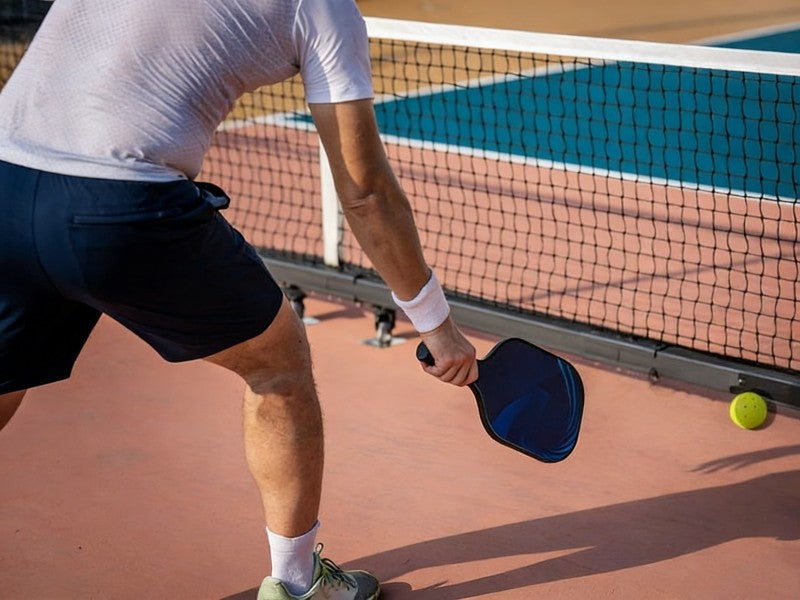
When it comes to improving your pickleball game, most players focus on paddle weight, shape, or hitting technique—but one crucial factor is often overlooked: grip size. Choosing a paddle with an inappropriate grip can affect your control, power, and even your long-term hand and wrist health.
Grip size refers to the circumference of the paddle handle, not its length. A grip that is too small forces your hand to overgrip, leading to tension and fatigue, while a grip that is too large limits wrist mobility and reduces shot accuracy.
Understanding Pickleball Paddle Grip Size
Before choosing a paddle, it’s essential to understand what grip size actually means and how it is measured.
What Grip Size Is
- Circumference: The distance around the handle at its thickest point, measured in inches.
- Standard sizes: Generally range from 4 inches (small) to 4 ½ inches (large).
- Material and shape: Some handles taper, while others maintain a consistent thickness. Cushioning and texture also affect how a grip feels, even if the circumference is correct.
Why It Matters
Grip size influences how naturally your hand can wrap around the paddle. An ideal grip allows for:
- Secure hold without excessive pressure
- Free wrist movement for dinks, spins, and volleys
- Reduced risk of blisters, tendonitis, or forearm strain
Improper grip size alters the kinetics of your swing, causing subtle but cumulative errors in stroke consistency and shot accuracy.

How to Measure Your Hand for the Right Grip
Selecting the correct grip size begins with accurate hand measurement. Many players skip this step, leading to common performance issues.
Measure Your Hand Length
- Extend your dominant hand.
- Measure from the tip of the middle finger to the base of your palm.
- This helps determine general hand size for a suitable grip.
Measure Palm Width
- Measure across the widest part of your palm, just below the knuckles.
- This indicates how much circumference your hand needs to wrap around comfortably.
Use the Index Finger Method
A practical test for checking paddle grip size:
1. Hold the paddle naturally.
2. Place your index finger of the opposite hand between your palm and the grip.
3. If there’s enough space for one finger, the grip is likely correct.
Reference Grip Size Charts
Many manufacturers provide charts correlating hand size with paddle grip size. For example:
|
Hand Measurement (inches) |
Recommended Grip Size |
|
6 7/8 – 7 1/8 |
4.0 in |
|
7 1/8 – 7 3/8 |
4.125 in |
|
7 3/8 – 7 5/8 |
4.25 in |
|
7 5/8 – 8 |
4.375 – 4.5 in |
Note: Use charts as a starting point. Individual comfort may vary based on finger length, play style, and wrist flexibility.
Tips for Accuracy
- Measure multiple times to ensure consistency.
- Use a soft tape measure, not a rigid ruler.
- Test grip on a paddle or dowel of similar thickness before purchasing.
- Consider hand dominance: your dominant hand may feel more comfortable on slightly smaller grips.
Common Grip Size Mistakes
Even seasoned players often make mistakes when selecting grip size. Understanding these errors is crucial to avoid long-term issues.
Grip Too Small
Symptoms:
- Fingers overlap when gripping
- Wrist feels tense during volleys
- Fatigue develops quickly
Effects on play:
- Reduced control and accuracy
- Higher risk of paddle slipping during fast rallies
- Forearm or wrist strain over time
Why it happens:
- Players assume smaller grips allow quicker wrist motion
- “Feels agile” at first, but leads to overgripping and reduced endurance
Grip Too Large
Symptoms:
- Fingers must stretch to reach around the handle
- Palm cannot wrap comfortably
- Wrist motion feels restricted
Effects on play:
- Limited spin and control
- Slower reaction on dinks or volleys
- Early fatigue due to overcompensation by forearm muscles
Why it happens:
- Some players equate larger grips with more stability
- Overestimating hand strength can lead to oversized paddle selection
Ignoring Material and Cushion
Grip size is not just circumference—material matters:
- Soft or cushioned grips can allow slightly larger sizes
- Hard grips may require slightly smaller sizes for comfort
- Texture affects perceived size: a rough or sticky grip may feel “thicker”
A poorly chosen material can exaggerate problems caused by improper size, even if your measurements were correct.
Choosing the Right Grip Size for Different Types of Players
Different players have different needs when it comes to grip size. What works for one person may not suit another, and hand size is only part of the equation. Your play style, skill level, and hand flexibility all influence the optimal grip choice.
New Players
New players often prioritize comfort and control over advanced techniques. Key recommendations:
- Use the index finger test or manufacturer’s size chart to select a starting grip size.
- Choose a slightly smaller grip if unsure—smaller grips allow wrist mobility, which is essential for learning dinks, volleys, and spins.
- Avoid overgripping; learning proper stroke mechanics early prevents long-term fatigue.
Intermediate and Advanced Players
Experienced players often want precision and power:
- Advanced strokes benefit from a grip that fits snugly without excessive pressure.
- Players with a more aggressive style may prefer slightly larger grips for stability during smashes, but not so large that wrist movement is restricted.
- Overgrips can be added to fine-tune the handle for different conditions, such as outdoor play where sweat is a factor.
Male vs Female Players
- Men typically have larger hand dimensions, often requiring grips of 4 ¼ – 4 ½ inches.
- Women often benefit from 4 – 4 ⅛ inch grips, though this varies with hand size.
- The key is comfort, not gender-based assumptions; always measure your hand and test before purchase.
Players With Prior Injuries or Limited Mobility
- Players with wrist, elbow, or hand injuries may require softer, cushioned grips.
- A slightly smaller grip can reduce strain, while proper material reduces vibration and impact.
- Consultation with a physical therapist or experienced coach can guide adjustments.
Common Myths About Pickleball Paddle Grip Size
There are many misconceptions circulating among recreational players. Clearing these myths helps avoid mistakes.
Myth: “Bigger grips are always more stable”
- Truth: While a larger grip can feel secure, it restricts wrist movement and reduces spin. Stability comes from proper technique, not grip size.
Myth: “Smaller grips increase wrist agility”
- Truth: Smaller grips allow wrist motion but require overgripping, which leads to forearm fatigue. Balance is key.
Myth: “Grip material doesn’t matter if size is correct”
- Truth: Material affects comfort, moisture control, and vibration absorption. A properly sized grip can still feel awkward if material is too hard, too soft, or slippery.
Myth: “One size fits all”
- Truth: Individual hand dimensions, finger length, and playing style all require personalized sizing. Even paddles of the same model can feel different across players.
Practical Tips for Grip Adjustment and Maintenance
Even with the correct grip size, small adjustments and proper maintenance improve comfort and performance.
Using Overgrips
- Wrap carefully, overlapping 10–20% of the previous layer.
- Check thickness by performing the index finger test after application.
- Replace overgrips regularly—sweat and wear can alter feel and increase slipping risk.
Grip Replacement
- Remove old grips completely; residual adhesive affects new grip alignment.
- Ensure new grip is centered and tight.
- For best results, allow the grip to “settle” for a day before intense play.
Testing Grip Comfort
- Perform practice swings and short rallies before matches.
- Check for finger cramping, wrist tension, or forearm fatigue.
- Small adjustments (taping, adding a thin layer of overgrip) can significantly improve comfort.
Storage and Longevity
- Keep paddles in a cool, dry environment.
- Avoid compressing grips with heavy objects, which can alter shape.
- Rotate paddles or grips for high-frequency players to reduce wear.

Frequently Asked Questions
Q1: How do I know if my grip is too small or too large?
- Too small: Fingers overlap, wrist tension occurs, control is reduced.
- Too large: Hand stretches uncomfortably, wrist mobility is limited, early fatigue develops.
Q2: Can an overgrip fully correct an improper grip size?
- Overgrips can fine-tune grip by 1–2 mm but cannot fully compensate for a significantly incorrect size. Start with the right base size.
Q3: Does grip size affect power and spin?
- Yes. A correct grip enables efficient energy transfer and wrist motion, crucial for power shots and spin.
Q4: Are there different recommended grip sizes for men and women?
- Generally, men use slightly larger grips due to bigger hand dimensions, but personal measurement is always best.
Q5: Can I change grip size mid-game?
- Minor adjustments with overgrip are possible, but replacing the grip mid-game is impractical. Test and adjust before matches.
Q6: How does grip size impact injury risk?
- Incorrect grip size can contribute to tendonitis, forearm strain, and wrist discomfort. Correct sizing reduces repetitive stress and allows safer play.
Conclusion
The right pickleball paddle grip size is more than a convenience—it is essential for control, power, comfort, and injury prevention. Choosing a grip that is too small or too large can reduce accuracy, increase fatigue, and elevate injury risk over time.
Key takeaways:
1. Measure your hand carefully using multiple methods.
2. Consider grip circumference, material, and cushioning together.
3. Avoid common mistakes: oversizing, undersizing, or ignoring material.
4. Adjust using overgrips or replacement grips for fine-tuning.
5. Test your paddle in practice to ensure comfort and proper technique.
By taking the time to match grip size to your hand, skill level, and style, you’ll improve your pickleball performance while protecting your hands and arms for years of enjoyable play.

Leave a comment
This site is protected by hCaptcha and the hCaptcha Privacy Policy and Terms of Service apply.