
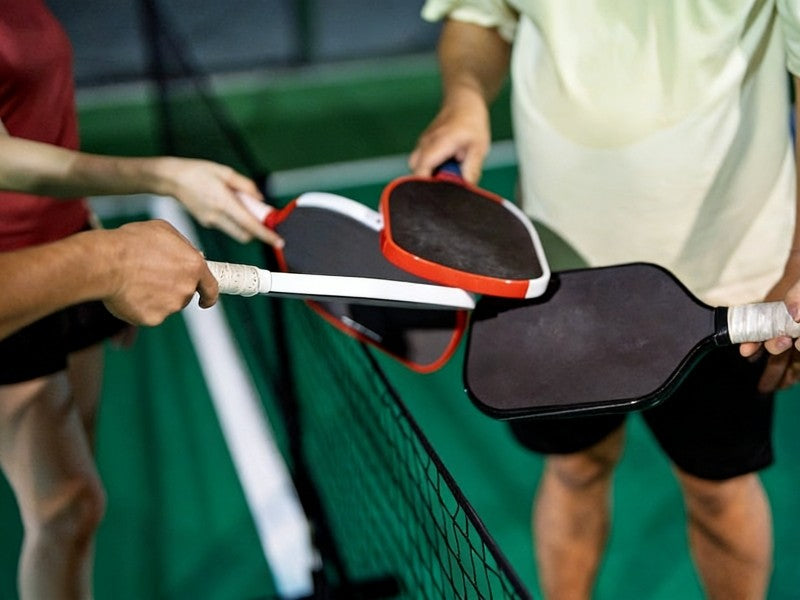
Why Paddle Tape Matters
Pickleball has exploded in popularity in recent years, but along with more play comes the reality of paddle wear and tear. Even the highest-quality paddles are susceptible to damage, especially along the edges or handle. This is where pickleball paddle tape comes in—offering protection, enhanced control, and longer lifespan for your equipment.
Many players are unsure which type of tape to use, how it affects their game, or if both types are necessary. Choosing the wrong tape—or applying it incorrectly—can reduce paddle performance, impact shot control, and even cause premature wear.
What Is Pickleball Paddle Tape?
Pickleball paddle tape is a specialized adhesive strip designed for specific areas of the paddle. There are two main types: edge guard tape and grip tape, each serving a distinct purpose.
Materials and Construction
- Edge guard tape: Usually made of durable plastic or rubberized material to absorb impact.
- Grip tape: Typically cushioned or textured synthetic material that enhances hand comfort and control.
- Both types are water- and sweat-resistant, ensuring durability during intense play.
Benefits of Paddle Tape
- Protection: Prevents chips, cracks, and scratches.
- Control: Grip tape enhances hand feel and reduces slippage.
- Longevity: Properly taped paddles last significantly longer, maintaining performance over time.
- Customization: Players can adjust thickness, cushioning, and texture to suit personal preferences.
Understanding these basics is essential before deciding which tape to apply or whether to use both.

Edge Guard Tape
The most vulnerable area of a pickleball paddle is its edge. Collisions with walls, floors, or other paddles can cause chipping, cracking, or splitting. Edge guard tape provides a protective layer that absorbs impact and prevents structural damage.
What It Is and How It Works
Edge guard tape is a narrow strip applied around the paddle’s perimeter. It forms a shock-absorbing barrier, shielding the paddle’s core and face from accidental contact. Most edge guards are made of flexible, durable plastic or polyurethane, allowing them to bend with the paddle without compromising protection.
Installation Guide
1. Clean the paddle edge to remove dust, sweat, or oils.
2. Align the tape with the top edge, ensuring coverage of vulnerable points.
3. Press firmly while wrapping around the paddle, avoiding air bubbles.
4. Trim excess for a smooth finish.
Proper installation ensures maximum protection while preserving the paddle’s original balance and weight distribution.
Pros and Cons
Pros:
- Reduces edge damage and prolongs paddle life
- Minimal effect on swing weight if installed correctly
- Available in multiple colors and thicknesses
Cons:
- Adds slight thickness, which may affect paddle feel if over-applied
- Must be replaced periodically as adhesive wears or tape gets damaged
- Improper installation can create uneven edges that interfere with shots
Maintenance Tips
- Inspect tape after each match for peeling or cracks.
- Replace immediately if damage is observed to maintain protection.
- Keep paddles clean to maximize adhesive longevity.
Grip Tape
While edge guard tape protects the paddle’s perimeter, grip tape focuses on the player’s contact area—the handle. A secure, comfortable grip is essential for precision, spin, and injury prevention.
What It Is and How It Works
Grip tape is applied around the handle to enhance friction, reduce slippage, and provide cushioning. It can be smooth, textured, or cushioned depending on player preference. Some grip tapes also absorb sweat, which is especially helpful for outdoor play or long sessions.
Installation Guide
1. Remove the old grip or clean the existing handle surface.
2. Start at the base of the handle, wrapping tightly with slight overlap.
3. Maintain tension as you wrap upward to prevent wrinkles.
4. Secure the end with tape or adhesive provided.
A well-installed grip tape can improve paddle control, reduce hand fatigue, and prevent blisters.
Pros and Cons
Pros:
- Improves handling and shot precision
- Reduces slipping due to sweat or moisture
- Can slightly customize handle thickness for comfort
Cons:
- Adds minor weight to the handle
- Must be replaced periodically as material wears or absorbs sweat
- Overwrapping can make the handle too thick, affecting wrist motion
Choosing the Right Material
- Cushioned synthetic tape: Comfortable, good for beginners or players with hand sensitivity
- Textured polymer tape: Provides maximum grip for aggressive play or high-sweat environmentsHybrid tape: Combines cushioning with textured surface for all-around performance
Edge Guard Tape vs Grip Tape: Key Differences
Before players decide which tape to use, it’s essential to understand the fundamental differences:
|
Feature |
Edge Guard Tape |
Grip Tape |
|
Primary Function |
Protects paddle edges from impact |
Enhances handle control and comfort |
|
Placement |
Around paddle perimeter |
Around handle only |
|
Impact on Gameplay |
Minimal if installed correctly |
Can improve precision and reduce fatigue |
|
Lifespan |
Medium; replace if damaged |
Medium; replace if worn or slippery |
|
Installation Complexity |
Moderate |
Easy to Moderate |
In the next section, we will dive deeper into how to choose the right tape based on your play style, skill level, and maintenance habits, and common mistakes to avoid.
Choosing the Right Paddle Tape for Your Needs
Selecting the right tape depends on your play style, frequency, and paddle care habits. Understanding the strengths of each type ensures optimal protection and performance.
Assessing Your Play Style
Casual players:
- If you play occasionally, edge guard tape is usually sufficient to prevent accidental dings and chips.
- Grip tape may be optional unless you have sweaty hands or prefer a softer handle.
Intermediate players:
- Often benefit from both tapes. Edge guards protect against repeated court contact, while grip tape improves handling for angled shots and volleys.
- Consider a cushioned grip tape for longer sessions to reduce hand fatigue.
Advanced or competitive players:
- Likely to require both edge guard and high-quality grip tape.
- Edge guard tape prevents damage from aggressive rallies and overhead smashes.
- Grip tape ensures maximum control, spin, and precision, particularly for quick net play or dinks.
Matching Tape Type to Skill Level
|
Skill Level |
Recommended Tape Use |
Notes |
|
Beginner |
Edge Guard Tape |
Protect paddle; grip tape optional |
|
Intermediate |
Edge Guard + Basic Grip Tape |
Improves control; prevents wear |
|
Advanced |
Edge Guard + Premium Grip Tape |
Enhances precision, comfort, and durability |
Using Both Tapes Together
Many players benefit from using edge guard and grip tape simultaneously, as they serve complementary purposes:
- Edge Guard Tape: Protects paddle edges, preserving face integrity.
- Grip Tape: Enhances hand control, comfort, and spin capability.
Key tip: Ensure edge guard installation does not interfere with grip tape placement, particularly for shorter handles. Proper alignment keeps paddle balance consistent.

Common Mistakes Players Make
Even experienced players often make avoidable errors when using paddle tape. Knowing these pitfalls can save money and improve performance.
Misapplying Edge Guard Tape
- Wrapping too loosely → paddle edges exposed, reducing protection
- Overlapping excessively → uneven paddle balance and feel
- Not trimming corners → can snag balls or clothing
Misapplying Grip Tape
- Wrapping too tightly → reduces cushioning, causes hand fatigue
- Wrapping too loosely → tape slips, reducing control
- Using thick tape on already small handles → reduces wrist mobility
Ignoring Tape Maintenance
- Old, worn tape loses grip and protective function
- Neglecting to clean the paddle before installation → adhesive fails faster
- Replacing only one tape type when both are worn → uneven feel and performance
Installation Tips and Best Practices
Correct installation ensures tape functions properly and lasts longer.
Tools and Materials Needed
- Edge guard tape or grip tape
- Scissors or a precision cutter
- Clean cloth and rubbing alcohol (for surface prep)
- Optional: small roller to smooth out bubbles
Step-by-Step Installation Tips
Edge Guard Tape:
1. Clean paddle edges thoroughly.
2. Align tape carefully along the perimeter.
3. Press firmly, smoothing out air bubbles.
4. Trim excess at corners for neat finish.
Grip Tape:
1. Remove old grip or clean handle surface.
2. Start at base, wrap with slight overlap, maintaining tension.
3. Finish at top and secure with provided tape.
4. Test hand feel and adjust for comfort.
Pro Tip: Always test your paddle after installation with short practice sessions before matches. This ensures the tape does not interfere with swing, wrist motion, or balance.

Leave a comment
This site is protected by hCaptcha and the hCaptcha Privacy Policy and Terms of Service apply.