


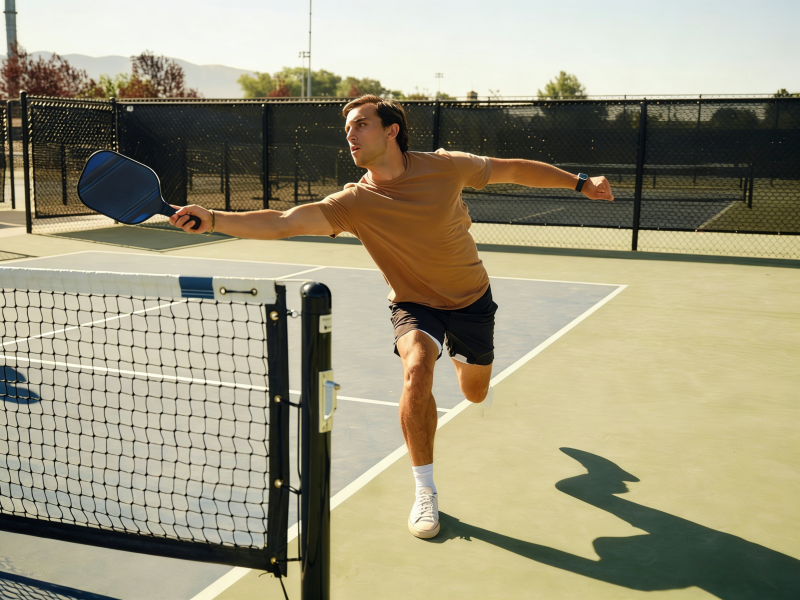
Why Shot Selection Matters More Than Shot Power in Pickleball Doubles
In pickleball doubles, success is rarely determined by who hits harder. Instead, matches are most often decided by shot selection, consistency, and the ability to apply pressure without taking unnecessary risks. Unlike singles, where court coverage and athleticism can compensate for imperfect decisions, doubles rewards players who understand percentage play—choosing shots that statistically lead to more points over time.
One of the most critical—and frequently misunderstood—decisions in doubles pickleball is whether to hit crosscourt or down-the-line. Recreational players often default to hitting straight ahead, believing it to be faster, more aggressive, or easier to aim. In reality, this instinct frequently leads to unforced errors, interceptions at the net, or loss of rally control.
Understanding Pickleball Court Geometry and Risk Margins
Strategic shot selection in pickleball begins with an understanding of court geometry. The dimensions and net structure of the pickleball court naturally favor certain shot paths over others.
Crosscourt Geometry Advantages
When hitting crosscourt, the ball travels diagonally across the court, which provides:
- More horizontal court space to clear the sidelines
- Lower effective net height, since the net dips slightly in the center
- Longer ball flight, allowing greater margin for depth control
These factors combine to create a significantly larger “safe window” for crosscourt shots. As a result, crosscourt rallies allow players to hit with controlled pace and spin while minimizing errors.
Down-the-Line Geometry Constraints
Down-the-line shots, by contrast, travel over the higher portion of the net near the post and must land within a much narrower corridor. This creates several challenges:
- Reduced margin for net clearance
- Smaller sideline tolerance
- Higher likelihood of balls drifting long or wide
While down-the-line shots can be effective, their success depends heavily on timing, balance, and opponent positioning.
In doubles, where two opponents are already positioned at the non-volley zone line, these geometric realities strongly influence risk versus reward.

What Is a Crosscourt Shot in Pickleball Doubles?
A crosscourt shot is any shot hit diagonally from one side of the court to the opposite side of the opponents’ court. In doubles pickleball, crosscourt shots are foundational rather than optional.
Why Crosscourt Dominates High-Level Play
If you observe advanced or professional doubles matches, you will notice several consistent patterns:
- Most dinks are played crosscourt
- Third-shot drops are frequently crosscourt
- Baseline exchanges favor diagonal rallies
This is not coincidence. Crosscourt shots allow players to:
- Maintain rally stability
- Apply pressure without rushing
- Force opponents to hit from less aggressive positions
Crosscourt play also reduces the likelihood of being attacked aggressively, since opponents must hit up or move laterally before initiating offense.
Crosscourt in Different Phases of the Rally
1. Serve and return phase
Crosscourt returns provide better depth control and reduce the chance of early errors.
2. Transition zone play
Crosscourt drops give players more room to reset and advance toward the non-volley zone.
3. Kitchen dinking exchanges
Crosscourt dinks help sustain patience-based rallies while waiting for opponent mistakes or openings.
In essence, crosscourt shots support a long-term strategic approach rather than short-term point chasing.
What Is a Down-the-Line Shot—and Why It Carries More Risk
A down-the-line shot travels parallel to the sideline, directly ahead of the hitter. Many players perceive this shot as more aggressive or decisive, but this perception often overlooks its inherent risks.
Common Motivations for Down-the-Line Shots
Players typically attempt down-the-line shots for one of the following reasons:
- To surprise an opponent expecting crosscourt
- To exploit an open sideline
- To counter aggressive poaching by the opposing net player
These are legitimate tactical reasons—but they require precise execution and clear justification.
Why Down-the-Line Shots Fail More Often
In recreational and intermediate play, down-the-line shots commonly result in:
- Balls clipped by the net tape
- Shots drifting wide due to reduced margin
- Easy volleys for the opponent stationed at the net
The problem is not the shot itself, but when and how often it is used. Treating down-the-line shots as a default option undermines rally stability and increases error rates.
Crosscourt vs Down-the-Line: A Strategic Comparison
From a statistical and strategic standpoint, crosscourt and down-the-line shots serve very different purposes.
Percentage Play vs Highlight Play
Crosscourt shots align with percentage play—a strategy focused on minimizing errors while gradually building advantage. Down-the-line shots are closer to situational plays, intended to capitalize on specific conditions.
Key contrasts include:
- Consistency: Crosscourt shots succeed more frequently
- Predictability: Crosscourt is expected, but not easily punished
- Risk: Down-the-line shots carry higher error and interception risk
In doubles, predictability is not inherently negative if the shot itself limits opponent options.
Interception Risk at the Net
Because doubles players occupy the non-volley zone line, down-the-line shots are more likely to be intercepted by an alert opponent. Crosscourt shots, by contrast, typically force opponents to volley from less aggressive angles or hit defensively.
This distinction becomes more pronounced as opponent skill level increases.
When Crosscourt Is the Smarter Choice
While no strategy applies universally, there are clear situations where crosscourt shots are overwhelmingly the better option.
Neutral or Defensive Situations
When you are off balance, under pressure, or stretched wide, crosscourt shots provide the safest path to recovery. Attempting a down-the-line shot in these moments often compounds the disadvantage.
Extended Dinking Rallies
Crosscourt dinking allows players to maintain patience, test opponent consistency, and wait for high balls or positional errors. Breaking this pattern prematurely often benefits the opponent more than the hitter.
Against Well-Positioned Opponents
When opponents are stable at the net and not overcommitting, crosscourt shots prevent them from generating easy offensive opportunities.
In these contexts, crosscourt is not a conservative choice—it is a strategically sound one.
When Down-the-Line Becomes the Right Tactical Choice
Although crosscourt shots should form the foundation of doubles play, down-the-line shots have an important tactical role when used deliberately and sparingly. The key is recognizing when the conditions justify the risk.
When an Opponent Overcommits Crosscourt
At higher levels, many players anticipate crosscourt shots so strongly that they shade toward the middle of the court. When an opponent’s body position, paddle angle, or footwork clearly favors crosscourt coverage, a controlled down-the-line shot can exploit this imbalance.
The most effective down-the-line shots in this scenario are not winners, but placement shots—low, controlled balls that pass the opponent rather than overpower them.
Against Aggressive Poaching
If the opposing non-volley-zone player is actively poaching or crowding the middle, continuing to hit crosscourt may invite interception. A timely down-the-line shot forces that player to respect their sideline responsibility, restoring balance to the rally.
This does not mean abandoning crosscourt play, but rather using down-the-line as a corrective tool.
When You Are in a Strong Offensive Position
Down-the-line shots are most successful when you are:
- Balanced and stationary
- Contacting the ball above net height
- Hitting with control rather than desperation
Attempting down-the-line shots while stretched wide, off balance, or late often leads to errors rather than advantage.

How Doubles Positioning Influences Shot Selection
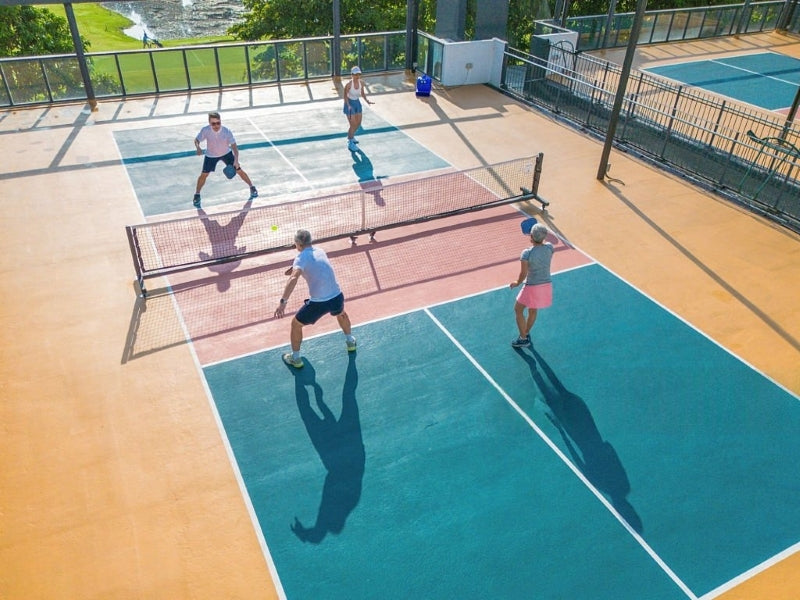
Shot selection in doubles pickleball cannot be separated from positioning and partner coordination. Where you and your partner stand directly affects which shots are high percentage.
Protecting the Middle vs Chasing the Line
In doubles, the middle of the court is generally the most vulnerable area. Overusing down-the-line shots can expose the middle, especially if your partner is not prepared to cover counterattacks.
Crosscourt shots naturally encourage both partners to maintain strong middle coverage, while down-the-line shots require clear anticipation and communication.
Role Clarity Between Partners
Successful doubles teams often develop informal roles:
- One player prioritizes consistency and reset shots
- The other looks for opportunities to apply pressure
Down-the-line shots should typically come from the player in a stable, offensive role—not as a reactive decision under pressure.
Common Mistakes Recreational Players Make
Many losses at the recreational and intermediate levels stem from strategic misunderstandings, not technical limitations.
Mistake: Treating Down-the-Line as the “Aggressive Default”
Players often believe that hitting down-the-line is inherently more aggressive or effective. In reality, aggression in doubles comes from shot quality and patience, not direction alone.
Mistake: Changing Direction Under Pressure
Switching from crosscourt to down-the-line while off balance dramatically increases error rates. Directional changes should be intentional, not reactive.
Mistake: Ignoring Opponent Positioning
Hitting to an “open” sideline without assessing opponent reach, paddle readiness, or net positioning often results in predictable interceptions.
FAQ: Crosscourt vs Down-the-Line in Pickleball Doubles
Should players always hit crosscourt in doubles?
No, but crosscourt should be the default. Down-the-line shots are situational tools, not primary strategies.
Is down-the-line more effective for advanced players?
Advanced players use down-the-line shots more effectively because they understand timing, positioning, and risk management—not because the shot itself is superior.
Should beginners practice down-the-line shots?
Yes, but in controlled settings. Beginners should first develop crosscourt consistency before introducing directional changes in competitive play.
Does handedness affect shot selection?
Yes. Right-handed vs left-handed pairings can change crosscourt dynamics and create different middle-court responsibilities.

Leave a comment
This site is protected by hCaptcha and the hCaptcha Privacy Policy and Terms of Service apply.