


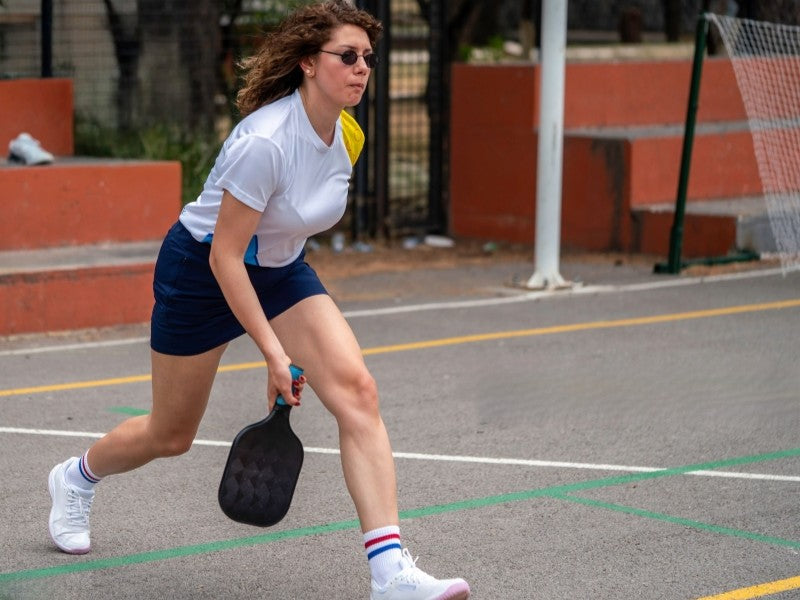
1. Why Understanding the Two Shot Types Changes Everything
In pickleball, you can hit two types of shots — offensive (attack) and defensive (control). This simple truth defines how every rally unfolds, how momentum shifts, and how champions win points.
Many players mistakenly think that being “aggressive” means always hitting harder. But seasoned professionals know better: true dominance in pickleball comes from balance — knowing when to apply pressure and when to slow the game down.
2. The Two Types of Shots in Pickleball: Power vs. Control
Every rally in pickleball can be divided into two tactical phases — attack and defense. Understanding the distinction is essential before diving into the techniques.
Offensive or Attack Shots
Attack shots are designed to apply pressure, force errors, or end the rally outright. They include powerful drives, volleys, and overhead smashes. The goal is to make the opponent react late or out of position.
Common characteristics of offensive shots:
· Higher swing speed and shorter reaction time
· Flatter trajectory with lower arc
· Intent to finish the point or create openings
· Typically executed when the ball is above net height
Examples include:
· Drive: a flat, fast shot that penetrates through the court
· Volley punch: redirecting the ball at the net without a full swing
· Overhead smash / putaway: ending a high ball with maximum power
Defensive or Control Shots
Defensive shots — often called “soft shots” — have the opposite purpose. They neutralize power, buy time, and reset the rally into a stable position. Instead of speed, they focus on placement, height, and consistency.
Common characteristics:
· Slower, higher trajectory
· Greater margin of safety over the net
· Use of touch, not muscle
· Ideal when the ball is below net height or you’re out of position
Examples include:
· Dink: a gentle shot over the net into the non-volley zone (NVZ)
· Block: absorbing a drive’s power and dropping it short
· Drop shot: a soft landing shot from midcourt to neutralize pressure
Ultimately, attack shots win points, but defensive shots prevent you from losing them. The best players master both — and even more importantly, know when to use each.

3. The Offensive Game: Building Power with Purpose
Attack shots are what make pickleball fast, thrilling, and strategic. However, powerful hitting without control can quickly backfire. Here’s how professional players generate offense without sacrificing consistency.
3.1 Mechanics of an Effective Attack Shot
To hit a clean, high-quality attack shot, three mechanical elements must align:
1️. Preparation and Positioning
Offense starts before the swing. Great players stay low, knees bent, paddle ready near chest height. They recognize attack opportunities early — typically when:
· The ball bounces above waist level
· The opponent’s shot floats short or high
· There’s an open court or opponent off balance
Proper footwork ensures stability and allows you to drive through the ball rather than swat at it.
2️. Paddle Angle and Contact Point
Keep your paddle face slightly closed (tilted forward) to produce a flat trajectory.
· Contact should be slightly in front of your body.
· Avoid scooping or chopping — think forward-through, not upward.
The flatter the angle, the faster the shot — but control must come from body rotation, not just arm speed.
3️. Body Rotation and Weight Transfer
Power originates from the core and legs, not the wrist. Rotate your hips and shoulders together as you swing forward. Imagine the energy moving from your back foot to your paddle through your torso — that kinetic chain creates efficient, repeatable power.
3.2 Common Types of Attack Shots
A. Drive (Flat Groundstroke)
The bread-and-butter of offense. It’s ideal when you’re midcourt and receive a waist-high ball.
· Purpose: Pressure the opponent, force weak returns, or set up the next volley.
· Technique Tip: Keep your paddle face nearly vertical; finish follow-through around shoulder height.
· Drill Idea: Practice 50 cross-court drives, aiming for the same target zone. Track how many stay in bounds.
B. Volley Punch
Used near the net, especially in doubles. Instead of a full swing, use a short forward “punch” motion.
· Purpose: Redirect pace, cut reaction time, dominate the kitchen line.
· Technique Tip: No backswing; let your shoulder and forearm handle the push.
· Drill Idea: Stand at the NVZ and practice quick volley exchanges with a partner, focusing on reaction time.
C. Overhead Smash or Putaway
A finishing move when you receive a high floater.
· Purpose: End the point decisively.
· Technique Tip: Turn sideways, point your non-paddle hand to the ball, strike with full extension at the highest point.
· Drill Idea: Toss high balls from midcourt and smash to deep corners — 30 reps alternating sides.
3.3 Training to Build Offensive Consistency
Building a reliable attack shot takes controlled repetition and feedback. Below are three drills used by coaches and competitive players alike.
|
Drill |
Objective |
Method |
Reps |
|
Speed Drive Challenge |
Improve drive control |
Hit 10 consecutive drives at 75% power without hitting the net or out |
5 sets |
|
Reaction Volley Drill |
Improve reflex and timing |
Partner volleys fast toward your paddle; keep paddle steady and short punch motion |
3 minutes continuous |
|
Putaway Target Game |
Improve accuracy |
Mark 3 zones (left, right, center) — hit 10 smashes per zone |
30 total |
Pro Tip: Use a radar or smartphone speed tracker occasionally — increasing speed while maintaining 90% consistency is better than pure power alone.
3.4 Common Mistakes in Offensive Play (and How to Fix Them)
|
Mistake |
Cause |
Fix |
|
Overhitting |
Relying solely on arm strength |
Focus on hip rotation and smooth follow-through |
|
Late contact |
Slow reaction or poor footwork |
Stay balanced, move early, contact ball slightly in front |
|
Too much wrist action |
Overcompensating for control |
Keep wrist firm, generate spin via body, not flick |
|
Ignoring target zones |
Random shot placement |
Visualize 3 safe zones: crosscourt, center, and sideline corners |
Coach’s Insight:
“The best attackers aren’t those who hit hardest — they’re the ones who hit smart. Learn where to aim and when to strike.”
3.5 The Psychology of Attacking
Power isn’t just physical — it’s mental. Offensive players control tempo and force opponents to respond under pressure.
However, reckless aggression often leads to unforced errors. The goal is to attack with purpose, not emotion.
Ask yourself before each offensive swing:
· Is this shot set up correctly?
· Do I have balance?
· Where’s my opponent positioned?
If all three align — attack.
If not, reset and wait.
This simple mental filter separates seasoned strategists from impulsive hitters.
3.6 How Pros Approach Offense
Professional pickleball players such as Ben Johns and Anna Leigh Waters demonstrate that elite offense isn’t about non-stop aggression — it’s about calculated bursts. They earn the right to attack by first stabilizing the rally, reading body language, and waiting for an opponent’s slightly high return.
In short, the best offense begins with patience.
Transition to the Next Section
Now that you’ve mastered the fundamentals of attack shots, it’s time to explore the other half of the equation — defensive or control shots.
If offense is about power and precision, defense is about touch, timing, and staying in control even when under pressure.
Mastering both will allow you to transition seamlessly from surviving a rally to dominating it.
4. The Defensive Game: Control, Touch, and Patience
If offensive shots win points, defensive shots keep you in the game long enough to win them. In pickleball, the ability to absorb pace and neutralize pressure is what separates steady, intelligent players from those who crumble under attack.
4.1 What Defines a Good Defensive Shot
A defensive or control shot isn’t just a “soft” hit — it’s a strategic reset. Its purpose is to give you time to reposition, regain court balance, and take away your opponent’s advantage.
The essence of defense lies in three principles:
1. Consistency – Keeping the ball in play under pressure.
2. Depth and Placement – Sending the ball deep enough to prevent an easy attack.
3. Tempo Control – Slowing the game down to disrupt your opponent’s rhythm.
When performed correctly, a good defensive shot turns a losing rally into a neutral or even favorable situation.
4.2 Core Defensive Shot Types
A. The Dink
A cornerstone of pickleball strategy, especially in doubles.
· Purpose: Neutralize fast rallies and force precision play near the Non-Volley Zone (NVZ).
· Technique: Bend knees, open paddle face slightly upward, and lift gently with forearm — not wrist.
· Ideal Contact: In front of the body, below net height.
· Common Mistake: Overhitting — if it reaches shoulder height, expect an attack.
Pro Drill:
Alternate cross-court dinks for 3 minutes with a partner, counting consecutive successful exchanges. Aim for 50-plus rallies to build muscle memory.
B. The Block
Used to absorb a drive’s power and drop it softly over the net.
· Purpose: Reset from a defensive position.
· Technique: Hold paddle firm but not rigid. Let the ball “die” off your paddle face.
· Pro Tip: Don’t swing — just angle your paddle slightly upward and freeze it on impact.
· Use Case: When your opponent hits a drive directly at you during fast exchanges.
C. The Drop Shot
The transition shot between baseline and net play.
· Purpose: Convert a deep rally into a controlled NVZ exchange.
· Technique: Hit with open paddle face and smooth upward lift; let the ball arc high and land softly in the kitchen.
· Challenge: Requires touch and patience — it’s one of the hardest skills to master consistently.
4.3 Building a Solid Defensive Foundation
|
Drill |
Objective |
Method |
Duration |
|
Soft Hands Wall Drill |
Improve touch and control |
Stand 6 ft from a wall, practice gentle dinks off it |
5 min |
|
Block Reaction Drill |
Build reflex for drives |
Partner drives repeatedly at you, block each one short |
3 min |
|
Drop Consistency Game |
Develop depth control |
Alternate drop shots from baseline into NVZ targets |
30 reps |
Mindset Rule: Defense isn’t passive — it’s active control. You’re dictating rhythm, not surrendering it.
5. Mastering the Transition: When to Switch Between Attack and Defense
In pickleball, you can hit two types of shots — but the magic happens in the transitions between them. The ability to read the game, switch gears instantly, and choose the right shot type separates intermediate players from tournament-level competitors.
5.1 Reading the Ball
The ball itself tells you which shot to choose:
|
Ball Height |
Best Option |
Reason |
|
Above net level |
Attack |
You can drive or volley downward with control |
|
At net level |
Neutral / Controlled |
Maintain placement and wait for next chance |
|
Below net level |
Defense |
A soft reset or dink minimizes risk |
If you attack a low ball, you’re likely to hit into the net. If you play too soft on a high ball, you miss scoring opportunities. Shot selection must match ball position.
5.2 Reading the Opponent
Advanced players constantly analyze their opponents’:
· Court position (Are they off balance or leaning forward?)
· Paddle angle (Is it open for a drop or ready for a drive?)
· Footwork cues (Do they expect a soft ball or a fast one?)
Recognizing these patterns helps you choose the right time to switch tactics — for instance, attacking when they’re mid-stride or defending when they’re ready to pounce.
5.3 The Golden Rule of Balance
A simple but powerful concept:
“Attack when you’re balanced and the ball is high. Defend when you’re off-balance or the ball is low.”
This rule governs over 80 % of successful rallies. Even pros stick to it because it minimizes unforced errors.
6. Common Mistakes in Balancing Attack and Defense
|
Mistake |
Description |
Fix |
|
Always attacking |
Forcing offense on low balls |
Learn to reset and wait for better setup |
|
Playing too safe |
Over-dinking instead of capitalizing |
Identify “attackable” balls — above net height |
|
Ignoring positioning |
Attacking off-balance |
Prioritize footwork before swing |
|
Emotional play |
Rushing after missed shots |
Breathe, refocus, play percentage pickleball |
Remember: Even the best players win by percentage, not perfection. Patience and decision-making win more rallies than raw speed.

Leave a comment
This site is protected by hCaptcha and the hCaptcha Privacy Policy and Terms of Service apply.