


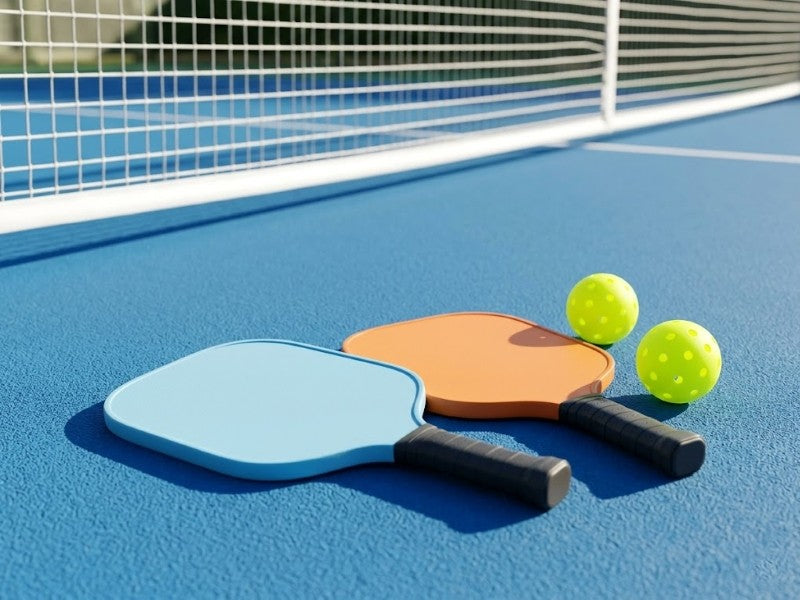
Walk past any public park or indoor sports facility, and you will undoubtedly hear the familiar, rhythmic "pop-pop" of paddles striking plastic. But as the sport has evolved from a casual backyard pastime to a highly competitive athletic endeavor, so too has the equipment industry. Today, players are flooded with thousands of paddle options boasting aerospace-grade carbon fiber, thermoformed edges, and proprietary polymer cores.
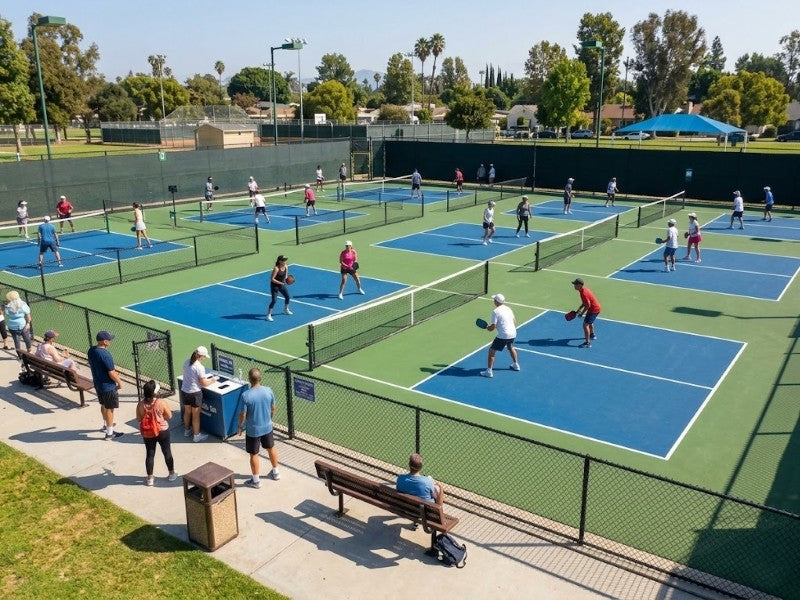
The ultimate secret to selecting the right gear is understanding where you currently stand on the spectrum of pickleball levels. Your skill rating directly dictates your biomechanics on the court—how fast you swing, how well you control the ball, and whether you are playing a game of sheer power or tactical placement.
Decoding Pickleball Levels: Where Do You Stand?
Before diving into paddle weights, core thicknesses, and face materials, you must honestly assess your current abilities. The standard benchmark used across the sport is the USA Pickleball Rating (UPR) system, a scale that generally ranges from 1.0 (true beginner) up to 5.5+ (professional).
Understanding these pickleball levels is not just about bragging rights or tournament brackets; it is about recognizing the "Gear Evolution Curve." As you progress through the ranks, your physical needs on the court undergo a dramatic shift.
What is the USA Pickleball Rating System?
- Levels 1.0 - 2.5 (The Beginner Phase): At this stage, players are learning the basic rules, getting comfortable with scoring, and focusing simply on hand-eye coordination. Rallies are short, mostly played from the baseline, and power is often erratic.
- Levels 3.0 - 3.5 (The Intermediate Phase): Here, the game transitions from a baseline slugfest to a tactical battle at the non-volley zone. Players understand the importance of the third-shot drop, can sustain dink rallies, and begin applying spin.
- Levels 4.0 - 5.5+ (The Advanced/Pro Phase): At the highest pickleball levels, players execute shots with high intentionality. They utilize aggressive topspin drives, unattackable drops, complex stacking strategies, and lightning-fast hand battles at the net.
Equipment Guide for Beginner Pickleball Levels (1.0 - 2.5)

Stepping onto the court for the first few months is both exhilarating and frustrating. At the 1.0 to 2.5 pickleball levels, your primary goal is consistency: getting your serves over the net, returning the ball deep, and keeping the rally alive.
Player Profile at this Level
Beginners often struggle with hitting the ball dead-center on the paddle. Mis-hits (striking the ball near the edge guard) cause the paddle to twist in the hand, sending the ball flying out of bounds. Furthermore, beginners tend to use a lot of wrist movement rather than swinging from the shoulder, which can lead to fatigue and joint strain.
Ideal Paddle Specs for Beginners: Forgiveness and Pop
To compensate for developing mechanics, a beginner's paddle must be highly forgiving and easy to maneuver.
-
Weight: Lightweight to Mid-weight (7.3 - 7.8 oz)
A lighter paddle is easier on the wrist and elbow. It allows new players to react quickly and swing with less physical effort. Heavy paddles will cause a beginner's arm to fatigue rapidly, ruining their form. -
Shape: Standard or Widebody (Approx. 16" long x 8" wide)
Avoid elongated paddles at this stage. You want a widebody shape because it offers the largest possible "sweet spot." Even if your hand-eye coordination isn't perfect yet, a widebody paddle ensures that off-center strikes still have a decent chance of clearing the net. -
Core Thickness: Thinner Polymer (10mm - 13mm)
A thinner core allows the kinetic energy to transfer straight to the ball. This provides effortless "pop," meaning the ball jumps off the paddle face easily, helping beginners get depth on their shots without swinging out of their shoes. -
Face Material: Fiberglass or Graphite
Fiberglass is highly flexible. When the ball hits a fiberglass face, the material bends and snaps back, creating a trampoline effect. This is exactly what players at the beginner pickleball levels need to easily return deep serves.
Must-Have Accessories for Beginners
Don't just stop at the paddle; safety and foundation are critical when you are just starting out.
- Court Shoes: Do not play in running shoes. Running shoes are designed for forward motion and have high, cushioned heels. Pickleball requires constant lateral (side-to-side) movement. Wearing running shoes on a hard court is a primary cause of rolled ankles. Invest in proper tennis or court shoes with flat, durable outsoles for lateral stability.
- Protective Eyewear: At the beginner pickleball levels, players have less control over where their shots are going. Errant balls flying at face level are common. Clear, shatterproof protective eyewear is an inexpensive way to prevent severe eye injuries.
- Bulk Outdoor Balls: Beginners need repetition. Buy a bulk pack of 50-100 durable outdoor balls (like the Franklin X-40) so you can spend time practicing serves and basic groundstrokes without having to chase a single ball around the court every ten seconds.
Equipment Guide for Intermediate Pickleball Levels (3.0 - 3.5)

Transitioning into the 3.0 to 3.5 rating is widely considered the most significant—and most challenging—milestone in pickleball. You are no longer just hitting the ball hard and hoping the opponent misses. You are now playing "real" pickleball.
Player Profile at this Level
At the intermediate pickleball levels, the game slows down strategically. Players realize that the team who controls the non-volley zone (NVZ) usually wins the match. You are learning the critical "third-shot drop" (a soft, arcing shot designed to land in the opponent's kitchen, allowing your team to move to the net). You are engaging in extended dink rallies (soft shots back and forth over the net). Power is no longer your primary weapon; placement, patience, and spin are taking over.
Ideal Paddle Specs for Intermediates: Control and Spin
Because you are now generating your own power through better footwork and body rotation, your beginner paddle is likely causing you to "pop up" your soft shots. It’s time to transition to a paddle designed for control and touch.
- Weight: Mid-weight (7.8 - 8.2 oz)As you face harder-hitting opponents, a paddle that is too light will get pushed around in your hand, leading to a lack of stability when blocking fast drives at the net. A mid-weight paddle provides the necessary mass to absorb heavy impacts without sacrificing too much hand speed during kitchen firefights.
-
Shape: Standard or Hybrid
While you can still use a widebody, many intermediate players switch to a hybrid shape (slightly longer, slightly narrower). This raises the sweet spot slightly higher up the paddle face, generating a bit more leverage for baseline drives while maintaining a generous blocking area. -
Core Thickness: Thicker Polymer Core (14mm - 16mm)
This is the most crucial upgrade for intermediate pickleball levels. A thicker core acts as a shock absorber. When your opponent hits a blistering 50 MPH drive at you, a 16mm core absorbs that kinetic energy, deadening the ball and allowing you to gracefully drop it into their kitchen. It significantly increases your "dwell time" (the fraction of a second the ball stays on the paddle face), giving you unparalleled touch and control. -
Face Material: Raw Carbon Fiber (RCF)
Goodbye fiberglass, hello carbon fiber. RCF is stiffer and features a naturally gritty texture. This grit bites into the plastic of the pickleball, allowing you to generate heavy topspin on your serves and drives, and nasty backspin (slice) on your dinks. Spin is the hallmark of intermediate-to-advanced play, as it allows you to hit the ball hard while ensuring it aggressively dips inside the baseline.
Essential Gear Upgrades for Intermediates
As the intensity of your matches increases, your supporting gear needs to keep pace.
- Premium Overgrips: At the 3.0-3.5 pickleball levels, you are playing longer, sweatier matches. A slippery grip leads to a loose paddle and botched shots. Using high-absorption overgrips (like Tourna Grip) and changing them every few weeks ensures your paddle remains locked in your hand during high-pressure points.
- Targeted Support Gear: The repetitive motions of intermediate play can start to wear on the body. This is the time to invest in compression sleeves for your elbow or knees, ensuring your joints are supported as you lunge for aggressive dinks or stretch for wide ATP (Around the Post) shots.
Equipment Guide for Advanced & Pro Pickleball Levels (4.0 - 5.5+)
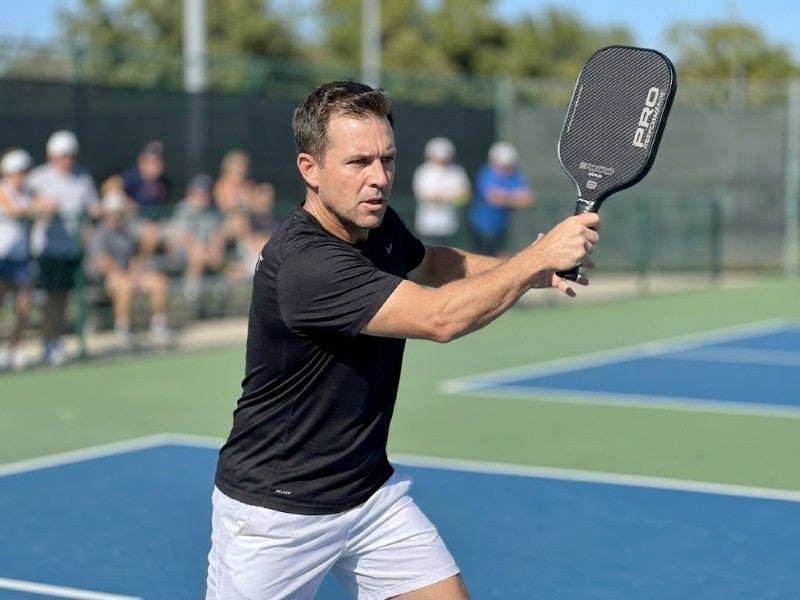
Reaching the upper echelons of the USA Pickleball Rating system is a testament to your dedication, drilling, and court IQ. At the 4.0 to 5.5+ pickleball levels, the margins for error are incredibly slim. Matches are won and lost on fractional seconds of reaction time, imperceptible variations in spin, and flawless execution of high-level strategies.
Player Profile at this Level
Advanced and professional players possess highly consistent mechanics. They utilize aggressive topspin drives to force pop-ups, hit unattackable third-shot drops with heavy underspin, and engage in lightning-fast hand battles at the net. They understand advanced tactics like stacking, isolating the weaker opponent, and disguising their shots until the last possible millisecond. Because their technique is practically ingrained in their muscle memory, they require equipment that amplifies their natural abilities and offers zero compromises.
Ideal Paddle Specs for Advanced Players: Power, Reach, and Maximum Spin
At these elite pickleball levels, players demand a paddle that delivers "plow-through" (the ability to drive through the ball without the paddle twisting) and extreme spin generation.
-
Weight: Mid-weight to Heavy (8.0 - 8.5+ oz)
Advanced players prefer heavier paddles to maximize power and stability. However, rather than buying a factory-heavy paddle, most elite players purchase a mid-weight paddle and strategically apply lead or tungsten tape to the edge guard. Placing tape at the 3 o'clock and 9 o'clock positions widens the sweet spot and increases twist weight, while placing it at the 12 o'clock position (top of the paddle) significantly increases swing weight for maximum driving power. -
Shape: Elongated (Approx. 16.5" long x 7.5" wide)
The elongated shape shifts the sweet spot further away from the hand, generating increased leverage and centrifugal force. This results in devastating power on overhead smashes and baseline drives. It also provides extra reach, allowing players to attack balls that would otherwise bounce harmlessly into the kitchen. -
Construction: Thermoformed Edges and Unibody Designs
Traditional paddles are built by sandwiching a core between two faces and slapping an edge guard on it. Advanced paddles often feature "thermoforming"—a manufacturing process where the paddle is baked under high heat and pressure, sealing the edges with carbon fiber. This creates a stiffer, incredibly durable paddle with a massive, edge-to-edge sweet spot and explosive power. -
Face Material: Premium Raw Carbon Fiber or Kevlar Blends
Elite players rely on top-tier raw carbon fiber (such as Toray T700) or emerging Kevlar/Carbon blends. These materials provide maximum dwell time and the highest allowable grit levels under USA Pickleball regulations, allowing for aggressive, shape-shifting ball trajectories.
Pro-Level Peripherals
- Tour-Grade Pickleball Bags: A standard backpack won't cut it. Advanced players carry multiple paddles, changes of clothes, and nutrition. Tour bags feature thermal-lined paddle compartments to protect expensive thermoformed paddles from extreme heat, which can cause core delamination (where the face separates from the core, ruining the paddle).
- Advanced Recovery Tools: Playing at high pickleball levels places massive stress on the knees, Achilles tendons, and rotator cuffs. Percussive massage guns, targeted electrolytes, and professional-grade kinesiology tape are mandatory accessories to maintain peak performance and prevent chronic injuries.

Leave a comment
This site is protected by hCaptcha and the hCaptcha Privacy Policy and Terms of Service apply.