


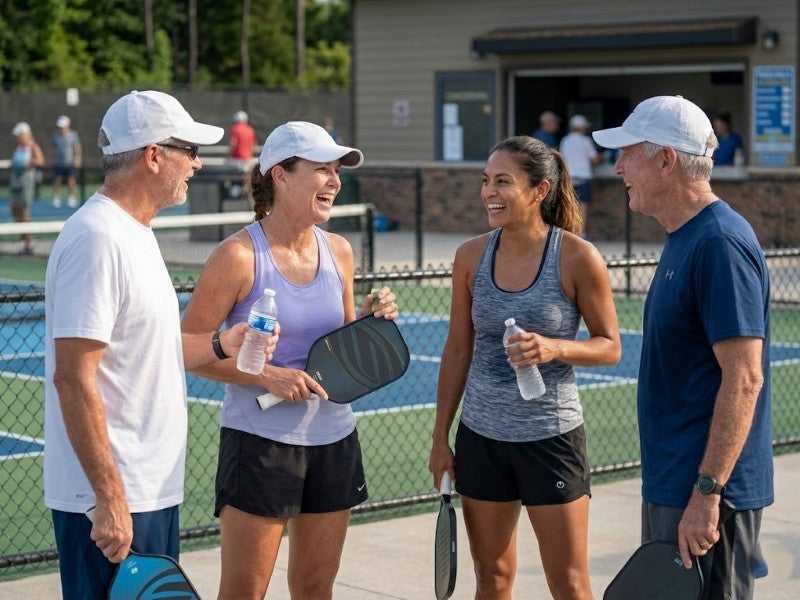
What began in 1965 as a quirky backyard game in Bainbridge Island, Washington, has evolved into an unstoppable cultural and athletic juggernaut. For several consecutive years, pickleball has dominated headlines as the undisputed "fastest-growing sport in America," leaving legacy sports scrambling to understand the phenomenon. But as we navigate through 2026, pickleball popularity has completely shattered its outdated stereotype as a "retirement community pastime" and transformed into a mainstream global industry.
The Numbers: Mapping the Explosion of Pickleball Popularity
You cannot fully grasp the magnitude of the pickleball boom without looking at the raw data. The growth trajectory of this sport does not resemble a steady climb; it looks like a hockey stick chart of a viral tech startup.
1.Year-Over-Year Growth Statistics
According to the Sports & Fitness Industry Association (SFIA) and the Association of Pickleball Professionals (APP) participation reports, the sport has experienced unprecedented, exponential growth over the last five years. While the sport hovered around 3 to 4 million players prior to the 2020 pandemic, recent data indicates that the total number of players in the United States alone has skyrocketed past 36 million adult Americans who have played at least once in the past year.
This staggering figure represents an average year-over-year growth rate exceeding 150% in certain regions. It has completely outpaced the growth metrics of tennis, golf, and basketball combined during the same timeframe.
2.The Demographic Shift: Gen Z Takes Over
Perhaps the most critical data point regarding pickleball popularity in 2026 is who is actually playing the game. Historically, the sport was famously championed by the 55-and-older demographic, heavily utilized in active-adult communities for its low-impact cardiovascular benefits.
Today, that narrative is entirely obsolete. The fastest-growing demographic in pickleball is now the 18-to-34-year-old age group (Gen Z and Millennials). College campuses are building dedicated pickleball complexes, and young urban professionals are trading traditional post-work happy hours for evening pickleball leagues. The average age of a pickleball player has plummeted by more than a decade in just a few short years, proving the sport has successfully bridged the generational gap and achieved true mass-market appeal.
3.The Court Infrastructure Boom
This massive influx of millions of new players created an immediate crisis: there simply were not enough courts. The resulting infrastructure boom has been historic.
Across the country, municipalities are rapidly converting underutilized tennis and basketball courts into dedicated pickleball venues. Because a standard tennis court footprint can comfortably accommodate up to four pickleball courts, parks departments are realizing they can quadruple their community engagement by simply repainting the lines. Furthermore, thousands of dedicated, state-of-the-art indoor facilities are being constructed monthly to satisfy the insatiable demand for year-round play, regardless of weather conditions.

The "Why": Demystifying the Universal Appeal
Data proves that the sport is exploding, but it doesn't answer the most important question: Why? What makes this specific combination of a paddle and a plastic ball so universally addictive? The secret to pickleball popularity lies in its masterful balance of accessibility, physical mechanics, and social engineering.
1.The Low Barrier to Entry
In many traditional sports, the learning curve is notoriously steep. If you want to play golf or tennis, you must endure months—if not years—of expensive lessons just to achieve a basic level of competency. If you step onto a tennis court as a beginner, you will spend 90% of your time picking up stray balls and 10% of your time actually playing.
Pickleball flips this ratio entirely. The basic mechanics can be taught and understood in less than 15 minutes. The paddle is shorter and closer to your hand, offering immense control. The plastic, hole-covered ball is highly aerodynamic and naturally travels slower than a pressurized tennis ball. This slower speed, combined with the smaller 20x44 foot court, drastically reduces the amount of sprinting required. As a result, beginners can experience the thrill of a long, competitive rally (hitting the ball back and forth 10 to 15 times) on their very first day. That immediate dopamine hit of success is what instantly hooks new players.
2.The Multi-Generational Equalizer
Pickleball is arguably the only physically active sport in the world where an athletic 25-year-old and a strategic 70-year-old can step onto the same court and have a genuinely competitive, wildly entertaining match.
Because the game features the "Non-Volley Zone" (the Kitchen)—a 7-foot area near the net where players cannot smash the ball out of the air—the sport heavily restricts pure physical dominance. You cannot simply overpower your opponent with sheer strength or blistering speed. The game relies heavily on patience, angles, soft touches (dinks), and precise placement. This creates a spectacular "equalizer" effect, allowing families of multiple generations to play together without anyone feeling left out or patronized.
3.The Ultimate Social Networking Tool
Finally, the explosion of pickleball popularity cannot be separated from its unique culture of socialization. Unlike tennis, where players book a private court for two hours and leave, pickleball is built around the concept of "Open Play."
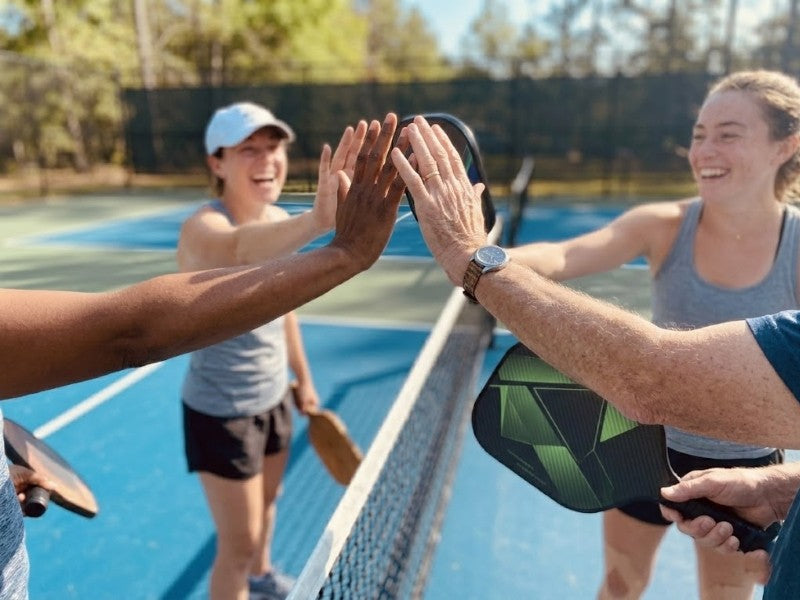
At public courts, players line up their paddles on a fence rack to signify who is next in line. When a game ends, the losers rotate out, and new players step in. You are constantly mixing partners and playing against strangers of varying skill levels. Furthermore, because the court is so small, all four players are frequently standing just 14 feet apart at the Kitchen line. This close proximity allows for constant conversation, banter, and laughter mid-game. In an increasingly digital and isolated world, pickleball has become the ultimate real-world social networking tool, fostering community connections faster than any other modern recreational activity.
The Economics of the Boom: Brands, Business, and Infrastructure
Pickleball popularity is no longer just a cultural phenomenon; it is a multi-billion dollar economic engine. Where the players go, the capital quickly follows. Over the past three years, we have witnessed an unprecedented influx of institutional money, celebrity backing, and retail innovation fundamentally restructuring the sports industry.
1.Celebrity Investments & Pro Leagues
The validation of pickleball as a legitimate spectator sport arrived rapidly. High-profile athletes and billionaires—including LeBron James, Tom Brady, Kevin Durant, and Mark Cuban—have aggressively purchased ownership stakes in professional teams within Major League Pickleball (MLP) and the Professional Pickleball Association (PPA) Tour.
This celebrity endorsement did more than just generate headlines; it secured massive national broadcasting deals with major television networks. Fans can now watch elite athletes execute blistering, 60-mph dink battles on live national television, elevating the sport from a recreational hobby to a premier entertainment product.
2.The Franchise and "Eat-and-Play" Model
Real estate developers have also cracked the code on how to monetize pickleball popularity. The traditional country club model is being replaced by the highly lucrative "eat-and-play" franchise model.
Brands like Chicken N Pickle and Smash Park have pioneered massive, multi-acre entertainment complexes that combine indoor and outdoor pickleball courts with high-end sports bars, lawn games, and gourmet dining. These venues have transformed the sport into a premier weekend destination for corporate retreats, birthday parties, and casual nights out, generating millions in food and beverage revenue while introducing the game to entirely new audiences.
3.The Equipment Evolution & D2C Disruptors
As players transition from casual beginners to daily competitors, their demand for equipment naturally evolves. The days of playing with heavy, cheap wooden paddles and dollar-store plastic balls are long gone. Today's players demand aerospace-grade carbon fiber faces, polymer honeycomb cores, and aerodynamically perfected, USAPA-approved balls.
However, legacy sporting goods brands have historically charged massive premium markups for this professional-grade gear. This price friction created the perfect environment for Direct-to-Consumer (D2C) disruptors to thrive.
The Global Shift: Is Pickleball Popularity Expanding Internationally?
While the United States remains the undisputed epicenter of the pickleball universe, the shockwave is officially crossing borders. For the sport to sustain its current momentum, it must conquer the international market.
Currently, the sport is experiencing a massive surge in Australia and the United Kingdom, where local tennis clubs are adopting the dual-use court model. In Asia, particularly in countries with strong badminton and table tennis cultures like India and China, the sport's fast-paced, high-reflex nature is translating perfectly to local demographics.
However, international expansion is not without its challenges. In Europe and South America, pickleball faces fierce competition from Padel, another rapidly growing racquet sport played on an enclosed court.
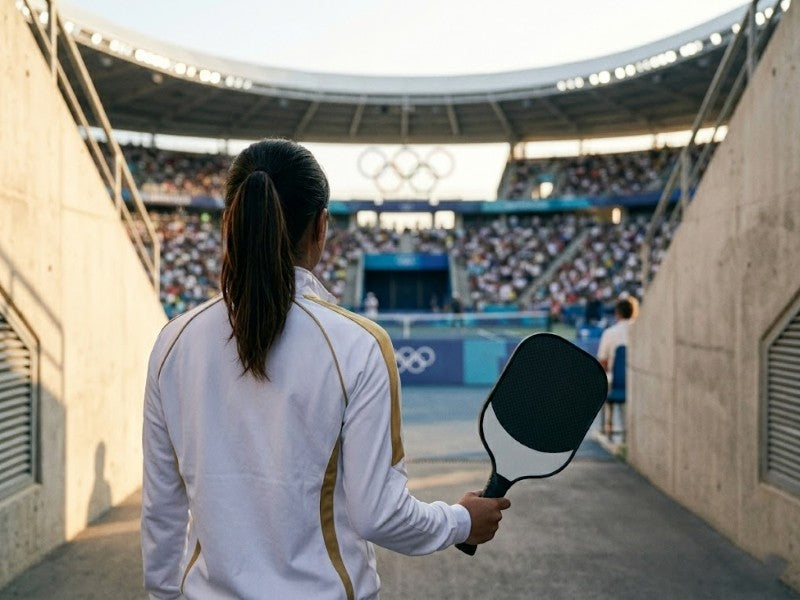
Ultimately, this global expansion is the most critical factor for the sport's long-term legitimacy. True international parity is the final hurdle pickleball must clear to achieve the ultimate athletic dream: becoming an official Olympic medal event.

Frequently Asked Questions (FAQ)
Q: Is pickleball still the fastest-growing sport in America in 2026?
A: Yes. According to recent participation reports from the SFIA, pickleball continues to hold the title of the fastest-growing sport, largely driven by a massive influx of Gen Z and Millennial players entering the game over the last two years.
Q: Why is pickleball growing more popular than tennis right now?
A: Pickleball has a significantly lower barrier to entry. Beginners can learn the mechanics and enjoy long rallies within their first 15 minutes of playing, whereas tennis requires months of practice to achieve basic competency. Additionally, pickleball courts are smaller, requiring less running and allowing for easier social interaction during the game.
Q: Who is the actual target demographic for pickleball?
A: While the sport was originally popularized by active adults ages 55 and older, the demographic has entirely shifted. Today, it is a universal sport. The fastest-growing segment of new players is adults between the ages of 18 and 34, proving its appeal across all generations.

Leave a comment
This site is protected by hCaptcha and the hCaptcha Privacy Policy and Terms of Service apply.