
You might think pickleball is a brand-new phenomenon that just magically appeared in your local park over the last couple of years. It certainly feels that way, given the explosive noise and the sudden takeover of tennis courts nationwide. But the truth is, the backstory of America's fastest-growing sport is much older, far weirder, and infinitely more fascinating than you could ever imagine.
Before we dive deep into the vault, here is a quick cheat sheet for your next trivia night:
Top 5 Quick Pickleball Facts (At a Glance):
- Invented in 1965: It is not a new sport; it was created over 60 years ago in Washington State.
- A "Mashup" Sport: The game was originally played using ping-pong paddles, a badminton net, and a plastic Wiffle ball.
- The "Dog" Legend: The sport might be named after the inventor's family dog, Pickles (though this is hotly debated).
- Explosive 2026 Growth: Today, it boasts over 36 million players in the US alone.
- The "Kitchen" has no food: The most famous area of the court is the 7-foot Non-Volley Zone, universally known as the Kitchen.
Ready to completely refresh your court knowledge? Let’s count down the top 21 most surprising pickleball facts you probably didn’t know.
The Weird and Wild History
The origin story of this athletic juggernaut does not start in a multi-million dollar corporate boardroom or a professional sports lab. It starts with whiny kids and a desperate dad.
1. It was invented to cure summer boredom.
In the summer of 1965, Washington State Congressman Joel Pritchard and his friend Bill Bell returned to Pritchard's home on Bainbridge Island to find their families sitting around with nothing to do. To cure the boredom, they tried to set up badminton, but couldn't find enough rackets. They improvised, and the seeds of a global sport were planted.
2. The original equipment was literally a mix of other sports.
Because they couldn't find a full set of badminton gear, Pritchard and Bell handed the kids ping-pong paddles and a perforated plastic Wiffle ball. They hit the plastic ball over the high badminton net on an old asphalt court, unknowingly creating the first-ever pickleball rally.
3. The great "Pickles the Dog" debate.
How did it get such a funny name? There are two competing historical facts. Joan Pritchard (Joel's wife) claimed she named it after the "pickle boat" in crew racing, which is a boat made up of leftover, mismatched oarsmen—fitting for a sport made of mismatched gear. However, the more popular legend claims the game was named after the family's cockapoo puppy, Pickles, who loved to chase the ball and run off with it.
4. The net was lowered because of... badminton.
Originally, the men played with the net set at the standard badminton height of 60 inches. However, as they played through the weekend, they realized the plastic Wiffle ball actually bounced incredibly well on the hard asphalt. They lowered the net to 36 inches to allow for tennis-style drives and groundstrokes, forever changing the mechanics of the game.
5. The first permanent court was built in 1967.
For the first two years, the game was strictly a makeshift backyard activity. It wasn't until 1967 that Bob O'Brian, a neighbor and close friend of the inventors, poured a custom asphalt slab in his own backyard specifically dedicated to the precise dimensions of this new, unnamed paddle game.
6. In 1976, the first tournament had a very strange prize.
The first known pickleball tournament took place in Tukwila, Washington, in 1976. It was completely grassroots, and because the sport was virtually unknown to the outside world, many of the participants were college tennis players who had literally never held a pickleball paddle before the day of the event.
Quirks of the Game: Court & Rules
Part of the sport's massive appeal is its incredibly unique—and sometimes downright bizarre—set of rules that perfectly neutralize age and pure athletic power.
7. You can fit four pickleball courts on one tennis court.
A standard pickleball court measures exactly 20 feet wide by 44 feet long. A standard tennis court pad is massive. This spatial efficiency is the exact reason why the sport is spreading so fast; parks departments realize they can instantly quadruple their player capacity by simply painting new lines on old tennis surfaces.
8. "The Kitchen" has absolutely nothing to do with food.
The "Non-Volley Zone" is a 7-foot area on both sides of the net where players are strictly forbidden from hitting the ball out of the air (a volley). Everyone calls it "The Kitchen." Why? While historians aren't 100% sure, it is widely believed the term was borrowed from the game of shuffleboard, which also features a penalty zone referred to as the kitchen.
9. The "Two-Bounce Rule" is totally unique to racquet sports.
In tennis, if you serve a blistering ball, your opponent can barely return it, and you can immediately rush the net to smash it away. Pickleball outlawed this with the Two-Bounce Rule: The serve must bounce once on the receiver's side, AND the return of serve must bounce once on the server's side before anyone can hit a volley out of the air. This brilliant rule eliminates the "serve-and-volley" advantage.
10. You absolutely cannot volley a serve.
In addition to the Two-Bounce Rule, you must let the initial serve hit the ground. If you stand at the baseline and swat an incoming serve out of the air before it bounces, it is an immediate fault, and you lose the point.
11. Matches only go to 11 (usually).
Unlike tennis, which uses a convoluted scoring system of 15, 30, and 40, or ping-pong which goes to 21, a standard pickleball game is played to 11 points. However, you must win by at least 2 points. This often leads to grueling, marathon matches that stretch into the 15-13 or 16-14 range as teams fiercely battle for the final two-point margin.

The Evolution of Gear & Science
As the sport transitioned from a casual backyard activity to a highly competitive, televised athletic discipline, the equipment had to undergo a massive scientific revolution.
12. The balls are strictly engineered, not just plastic toys.
While they look like traditional Wiffle balls, modern pickleballs are meticulously engineered for specific aerodynamics. Outdoor balls feature exactly 40 smaller holes and are made of heavier, harder plastic to cut through the wind and withstand rough concrete. Indoor balls use 26 larger holes and softer plastic to glide through climate-controlled gymnasiums without skidding on the hardwood.
13. Wood is out, aerospace materials are in.
If you showed up to a court in the 1970s, you were playing with a solid, heavy wooden paddle cut from plywood. Today, swinging a wooden paddle is a massive disadvantage. The modern game is dominated by aerospace-grade materials. Professional paddles now feature raw carbon fiber faces for extreme spin generation and highly engineered polymer honeycomb cores that absorb impact vibration.
14. Direct-to-Consumer (D2C) brands are crushing legacy giants.
For years, players had to pay massive premium markups to legacy sporting goods giants just to get a decent paddle. Today, the market has been entirely disrupted by Direct-to-Consumer brands. Innovative companies like Srikel have changed the game by cutting out the middleman. They are delivering professional-grade equipment—like their seamless, rotationally molded tournament balls and high-performance Aura carbon fiber paddles—directly to players at a fraction of the traditional cost. It is a level of access to elite gear that players a decade ago could only dream of.
15. A pickleball travels slower than a tennis ball... but reaction times are faster.
A professional tennis serve can easily top 130 mph, while a professional pickleball overhead smash maxes out around 60 to 70 mph. However, because players in pickleball are standing a mere 14 feet apart at the Kitchen lines during a rapid-fire volley exchange, the actual reaction time required to hit the ball is often shorter than the reaction time required at the professional tennis level.
16. The sport has a serious "noise" problem.
As the sport exploded, so did the noise complaints. The high-frequency, sharp "Pop!" sound of a hard plastic ball striking a composite paddle is scientifically proven to be more piercing and disruptive to the human ear than the muffled thud of a tennis ball. This unique acoustic signature has actually triggered a wave of noise-ordinance lawsuits across the country, prompting engineers to scramble to invent "quiet" paddles and sound-dampening acoustic fences.
Mind-Blowing Demographics & Pop Culture
The cultural takeover of pickleball is unlike anything the sports and fitness industry has ever witnessed. It has officially permeated every layer of modern society.
17. It has been America’s fastest-growing sport for several consecutive years.
This is not a subjective opinion; it is a statistical fact. According to sports industry participation reports, pickleball has held the title of the fastest-growing sport in America for the better part of a decade. As we navigate through 2026, the sport has shattered expectations, with over 36 million adult players stepping onto the court in the US alone.
18. The average age of a player has plummeted.
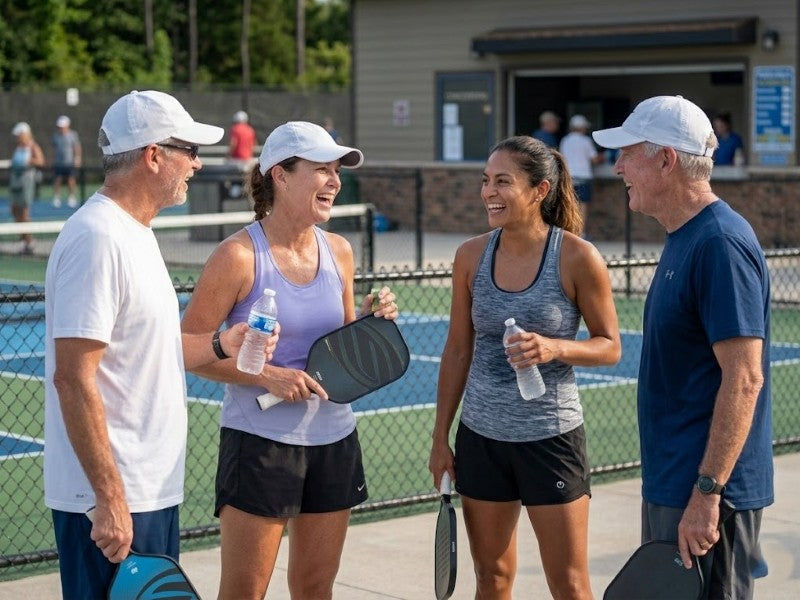
Throw out the outdated stereotype of pickleball being exclusively for retirees in Florida. The demographics have completely flipped. Today, the single fastest-growing segment of new pickleball players is the 18-to-34-year-old demographic. From college campuses to young urban professional leagues, Gen Z and Millennials have completely taken over the courts.
19. LeBron James, Tom Brady, and Drake own professional teams.
The commercial viability of the sport skyrocketed when a wave of billionaire athletes and A-list celebrities began buying up ownership stakes in Major League Pickleball (MLP). When names like LeBron James, Tom Brady, Kevin Durant, and Drake are financially invested in the growth of a league, you know the sport has officially entered the mainstream cultural zeitgeist.
20. It's an insane calorie burner.
Do not let the smaller court size fool you. While it requires less absolute sprinting than tennis, the constant lateral movement, squatting at the Kitchen line, and rapid rotational core movements make it an incredibly intense cardiovascular workout. A grueling hour-long singles match can easily burn between 600 and 700 calories.
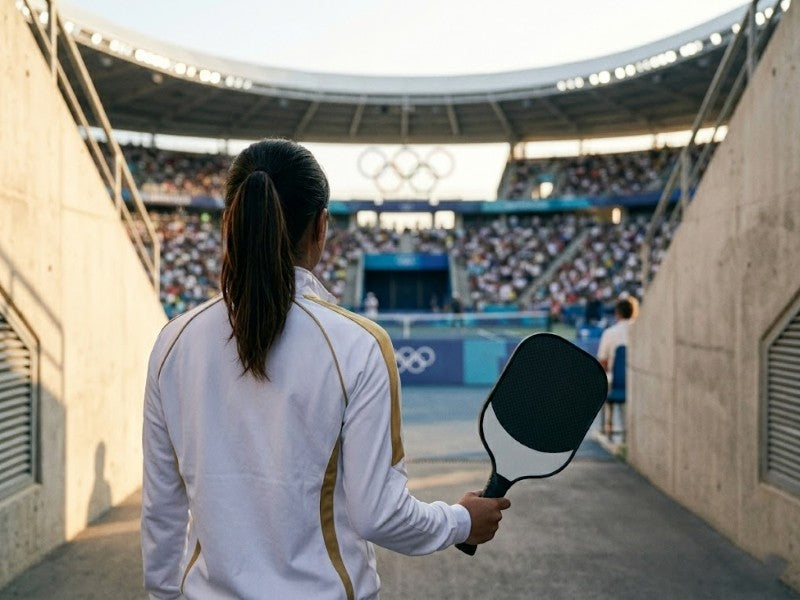
21. The ultimate goal is the Olympic Games.
With millions of players, international broadcasting deals, and celebrity backing, the global governing bodies of the sport have set their sights on the ultimate athletic achievement: the Olympics. While it takes years of international lobbying and expansion to meet the strict criteria of the International Olympic Committee, insiders are actively pushing to see pickleball hit the Olympic podium by the 2032 or 2036 Summer Games.

Leave a comment
This site is protected by hCaptcha and the hCaptcha Privacy Policy and Terms of Service apply.