


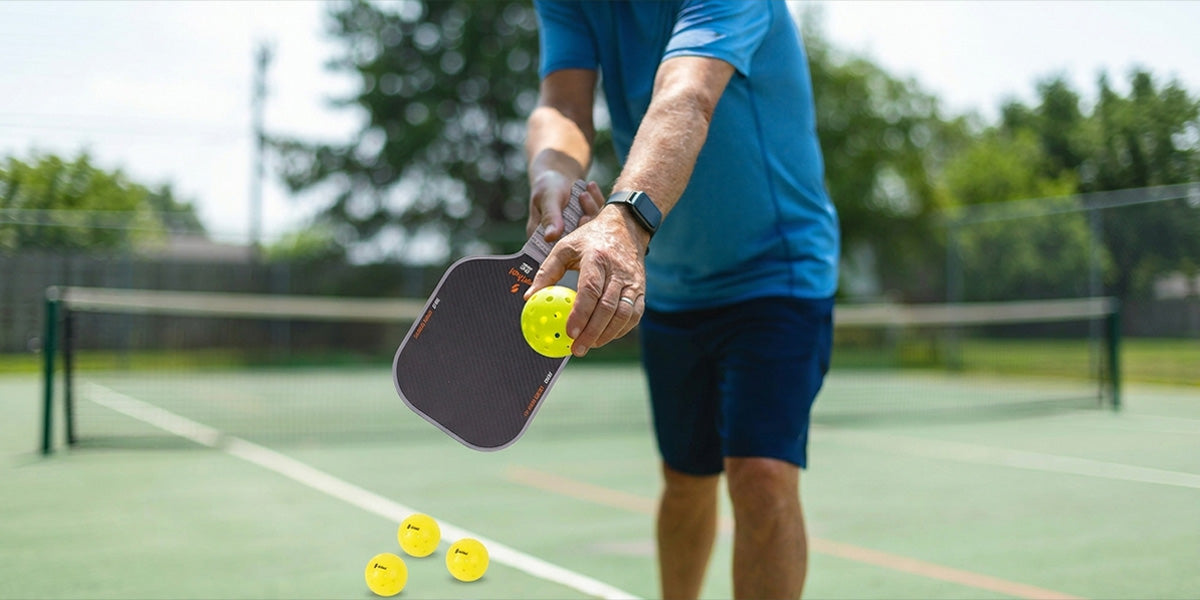
If you are new to pickleball, one of the first things you will probably wonder is something very simple: what does the ball actually look like? It is not a tennis ball, not exactly a wiffle ball, and it definitely has its own unique identity. Understanding the appearance, size, weight, and construction of a pickleball is the first step toward choosing the right equipment and improving your game.
In this article, we will break down everything you need to know about the visual and technical aspects of a pickleball. We will cover official specifications, material differences, the reason behind those distinctive holes, and how to tell indoor and outdoor balls apart. By the end, you will have a clear mental image of a pickleball and a solid grasp of why it is designed the way it is.
The Basic Appearance of a Pickleball
To the untrained eye, a pickleball might look like a toy you’d find in a backyard game. However, its design is highly specialized for competitive play.
Shape and Structure
A pickleball is perfectly spherical and entirely hollow. Unlike a tennis ball, which has a pressurized rubber core and a felt cover, a pickleball is a single layer of molded plastic. The "shell" of the ball is relatively thin but rigid enough to maintain its shape after thousands of high-velocity impacts with a paddle.
The Surface
The surface is smooth to the touch, though high-quality balls often have a slight matte finish to help the paddle "grip" the ball for spin. You won’t find any fuzz, seams (in high-end models), or textures that would significantly drag in the air.
Color and Visibility
While you can find pickleballs in almost any color—including white, blue, and orange—the most common color is Optic Yellow. This high-visibility fluorescent shade is chosen because it stands out against most court backgrounds (blue or green) and is easy for players to track under bright sun or indoor stadium lighting.

Official USAPA Standards and Specifications
For professional play and serious B2B sourcing, a ball must meet the standards set by the USA Pickleball Association (USAPA). If a ball doesn't meet these specs, it won't be allowed in sanctioned tournaments.
|
Specification |
Requirement |
|
Diameter |
2.87 to 2.97 inches (73 to 75 mm) |
|
Weight |
0.78 to 0.935 ounces (22 to 26.5 grams) |
|
Hole Count |
Indoor: 26 holes / Outdoor: 40 holes |
|
Bounce Height |
30 to 34 inches when dropped from 78 inches |
|
Color |
Any uniform single color (bright colors recommended) |
|
Surface |
Smooth, no rough texture or raised edges |
These strict requirements ensure that whether you are playing in California or London, the ball reacts the same way when hit.

Key Features of a Pickleball: Size, Weight, and Holes
1. Size and Weight
A pickleball is slightly larger than a tennis ball but significantly lighter. Because it is made of plastic and filled with air (via the holes), it doesn't travel as fast or as far as a tennis ball. This "slow" nature is exactly what makes pickleball a game of strategy and "dinking" rather than just raw power.
2. The Hole Pattern
The holes aren't just for decoration; they are the most critical design feature.
- Outdoor balls have 40 small, precision-drilled holes. These smaller holes help the ball cut through the wind and maintain a straight flight path.
- Indoor balls have 26 larger holes. Since there is no wind indoors, the larger holes allow for more "drag," making the ball easier to control and play with on smooth gym floors.
3. Durability and "Out-of-Round"
A key visual feature of a "bad" pickleball is when it becomes "out-of-round." Over time, cheap plastic balls will warp into an oval shape. High-quality balls are designed to stay perfectly circular for as long as possible.

Indoor vs. Outdoor Pickleballs: Spotting the Differences
One of the most common questions for new players and distributors is identifying the difference between indoor and outdoor balls. They are not interchangeable.
Comparison Table: Indoor vs. Outdoor
|
Feature |
Indoor Pickleball |
Outdoor Pickleball |
|
Material |
Softer plastic (LDPE/Soft PE) |
Harder, more durable plastic (PP/Hybrid) |
|
Hole Count |
26 larger holes |
40 smaller holes |
|
Weight |
Slightly lighter |
Slightly heavier (to resist wind) |
|
Durability |
Lower on rough surfaces |
Higher, more crack-resistant |
|
Bounce |
Lower and softer |
Higher and livelier |
|
Spin Capability |
Higher due to softer surface |
Moderate but consistent |
|
Wind Resistance |
Low, affected easily by air currents |
High, designed for outdoor conditions |
|
Noise |
Quieter on hardwood floors |
Louder on concrete or asphalt |
|
Best For |
Gym floors, smooth surfaces |
Asphalt, concrete, outdoor courts |
Using an indoor ball outside will usually result in a very short lifespan. The softer plastic cracks quickly on rough concrete. Conversely, an outdoor ball used indoors will feel like a rock coming off the paddle and can be uncomfortably loud in an enclosed space.
What Is a Pickleball Made Of?
The word "plastic" does not fully capture the engineering that goes into a modern pickleball. The specific type of polymer and the manufacturing process both play huge roles in how the ball behaves.
Polyethylene (PE) and Polypropylene (PP)
Most pickleballs are made from either polyethylene (PE) or polypropylene (PP) , sometimes blended with other additives to tweak performance.
- Polyethylene (LDPE or soft PE) is used primarily for indoor balls. It is slightly more flexible and has a softer feel on impact. This material absorbs some of the energy from the paddle, giving players a bit more touch and a quieter sound.
- Polypropylene (PP) is harder, stiffer, and more resistant to abrasion. Outdoor balls rely on PP because it holds up against the grinding action of rough court surfaces. It also resists warping in hot weather better than softer plastics.
- Composite Blends: Some premium balls use proprietary blends that balance the soft feel of PE with the durability of PP.
Injection Molding and Seamless Construction
A high-quality pickleball is made using injection molding. Plastic pellets are melted and injected into a two-part spherical mold under high pressure. The two halves are then fused together while the plastic is still hot, creating a seamless, one-piece construction. This is a critical detail. Cheaper balls sometimes have a visible seam or are glued together, and those weak points are exactly where the ball will eventually crack after repeated hard smashes.
Why Material Matters for Performance
The material directly affects three things:
1. Durability: Harder PP lasts longer outdoors.
2. Feel: Softer PE offers a more cushioned hit.
3. Sound: Outdoor balls have a distinct "pop" or "clack" sound; indoor balls are much quieter.
When you are browsing for replacement balls, looking at the material specification tells you a lot about how that ball is intended to be used.
Pickleball vs. Wiffle Ball vs. Tennis Ball
Because a pickleball has holes like a wiffle ball and is roughly similar in size to a tennis ball, newcomers often mix them up. Here is a clear comparison to help you spot the differences instantly.
|
Characteristic |
Pickleball |
Wiffle Ball |
Tennis Ball |
|
Material |
Hard PE or PP plastic |
Thin, flexible plastic |
Rubber core with felt cover |
|
Diameter |
~2.9 inches |
~2.8 to 3.2 inches |
~2.6 to 2.7 inches |
|
Weight |
0.8 to 0.9 oz |
~0.7 oz (lighter) |
~2.0 oz (much heavier) |
|
Surface |
Smooth hard plastic |
Smooth thin plastic |
Fuzzy felt |
|
Hole Design |
26 to 40 round holes |
8 oblong slots |
No holes |
|
Bounce |
Moderate, consistent |
Unpredictable, light |
High, springy bounce |
|
Durability |
Designed for repeated impact |
Fragile, cracks easily |
Felt wears down over time |
|
Use Case |
Competitive pickleball play |
Backyard games |
Tennis |
The wiffle ball comparison is the most common. While a pickleball does resemble a wiffle ball, it is much more robust and engineered for precision. You would not want to play a serious pickleball match with a wiffle ball—it would crack within a few points and fly all over the place.
How to Choose a High-Quality Pickleball
If you are sourcing balls for a club or a store, look for these three things:
1. Check for USAPA Approval
If you ever plan to play in a league or tournament, you need USAPA-approved balls. The approval stamp ensures the ball meets all official size, weight, and bounce requirements.
2. Match the Ball to Your Playing Surface
This is the single most important decision. If you play primarily indoors on a wood floor, pick an indoor ball with 26 holes and a softer composition. If you play outdoors on a hard court, pick an outdoor ball with 40 holes and a harder polymer shell.
3. Look for Seamless Construction
Examine the ball closely. A high-quality ball will have no visible seam line around the equator. Seamless, injection-molded balls are much less likely to crack prematurely.
4.The "Squish" Test
Squeeze the ball. An indoor ball should have a little give; an outdoor ball should feel very rigid.
5. Consider Visibility
If your local courts have poor lighting or you often play in the evening, opt for a bright neon yellow or optic green ball. The extra visibility can genuinely improve your reaction time at the net.
6. Buy in Multi-Packs for Value
Serious players go through balls faster than they expect. Outdoor balls, in particular, can lose their grip or develop hairline cracks after extended play. Purchasing a multi-pack or a set that includes both indoor and outdoor options (like a starter bundle) often provides the best long-term value.
7.Brand Authority
Choose brands that specialize in pickleball. For example, Srikel focuses on high-performance gear that removes the "brand tax," providing USAPA-standard balls (like the XS-series) that offer professional durability without the premium markup.

Leave a comment
This site is protected by hCaptcha and the hCaptcha Privacy Policy and Terms of Service apply.