


As the weather turns cold, the rainy season sets in, or local outdoor courts become unbearably crowded, a massive migration occurs in the pickleball community: the move indoors. Players are increasingly looking to transform community gymnasiums, local recreation centers, basketball courts, and even their own spacious garages or basements into fully functional pickleball battlegrounds.
To maintain the integrity of the game and the condition of your indoor space, investing in a dedicated, purpose-built indoor pickleball set is not just a luxury—it is a structural necessity.
Top 5 Portable Indoor Pickleball Sets in 2026
Based on our rigorous testing of material quality, ease of use, and overall performance on indoor surfaces, here are the five best systems available on the market today.
1. Best Overall for Quick Setup & Home Use: Srikel Portable Indoor Set
For the vast majority of players—ranging from families looking to convert their driveway or garage, to local community centers needing reliable, rapid-deployment gear—finding a complete, high-quality ecosystem is the top priority. This is where the Srikel Portable Indoor Set completely disrupts the market.
- The Breakdown: What sets Srikel apart is its engineering focus on the "all-in-one" user experience without compromising on regulation standards. The net frame utilizes a brilliant interlocking steel tube design. Because the pieces are intuitively engineered to snap together via tension buttons, a single person can comfortably assemble the full 22-foot regulation net in roughly three minutes.
- Indoor Performance: Srikel explicitly designed this set with indoor surfaces in mind. The wide, heavy-duty steel bases are equipped with thick, non-marking rubber friction pads. Whether you are setting it up on an expensive gymnasium hardwood floor or a smooth basement epoxy coating, the net will not slide upon impact and will not leave black scuff marks.
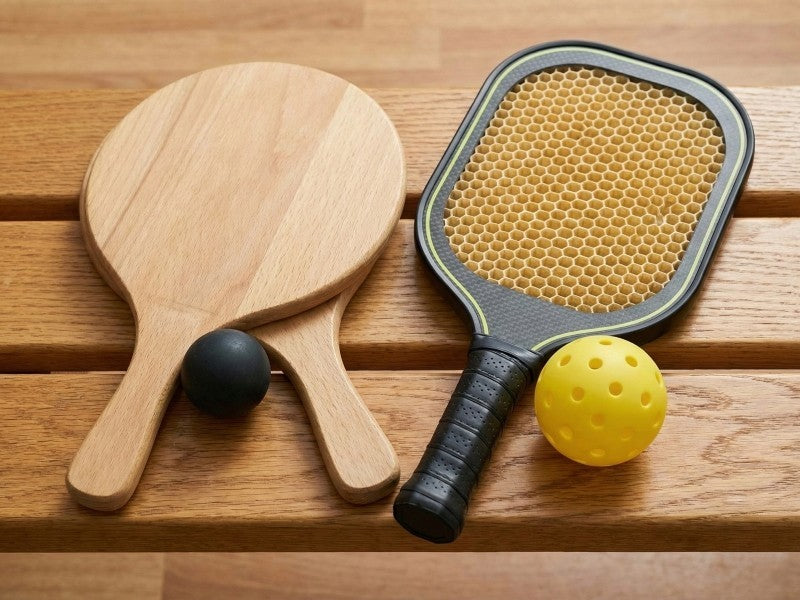
- The Complete Package: Unlike the SwiftNet, Srikel provides a true indoor pickleball set. Out of the box, it includes the regulation net, high-quality polymer honeycomb paddles (which naturally dampen indoor acoustics), and precision-molded 26-hole indoor pickleballs. It completely eliminates the guesswork of matching outdoor gear to indoor conditions.
- Pros: Exceptional value as a complete bundle; rapid, tool-free interlocking assembly; outstanding floor protection via rubberized bases; includes noise-dampening paddles and indoor-specific balls.
- Cons: The heavy-duty steel frame, while providing excellent stability on flat indoor floors, makes the carrying bag slightly heavier than carbon fiber alternatives.

2. The Tournament Standard: SwiftNet 2.1 Portable Pickleball Net
When local recreation centers are hosting sanctioned indoor tournaments, the SwiftNet 2.1 is frequently the equipment of choice. It is a marvel of modern sporting engineering, though it comes at a premium price point.
- The Breakdown: Unlike traditional steel frames that are incredibly heavy, the SwiftNet utilizes aerospace-grade recycled carbon fiber. This makes the entire system shockingly lightweight (under 15 lbs) while maintaining structural rigidity that rivals permanent, bolted-in nets. It utilizes a unique locking tension system that keeps the top tape perfectly straight across the entire 22-foot span.
- Indoor Performance: The feet are specifically designed with non-marking, flat profiles that rest gently on hardwood floors without digging in.
- Pros: Unmatched net tension; incredibly lightweight carbon fiber construction; true tournament-level playability.
- Cons: It is a standalone net system, meaning paddles and indoor balls must be purchased separately. At over $300, it is a massive investment for casual home players.
3. The Ultra-Lightweight Contender: A11N Portable Pickleball Net System
The A11N has become a staple on e-commerce platforms for players who are constantly on the move and need a reliable, budget-conscious net to throw into the trunk of their car.
- The Breakdown: The A11N system relies on a brightly painted, weather-resistant metal frame. It uses a very straightforward bungee-cord system running through the net tape to maintain tension, supported by a fiberglass middle post to prevent the 34-inch center sag.
- Indoor Performance: It performs admirably in gymnasiums. It features basic rubber end caps on the feet to prevent immediate scratching. However, because the base footprint is slightly narrower than the Srikel system, aggressive players diving near the net might cause it to shift slightly on very highly polished wood floors.
- Pros: Highly affordable standalone net; bright yellow net tape offers excellent visual contrast against dark indoor floors; very straightforward assembly.
- Cons: The rubber feet are smaller, providing slightly less friction on polished floors; it does not include paddles or indoor balls, requiring separate purchases.
Here is the second half of the comprehensive guide. We will conclude our top 5 rankings with highly specialized sets for specific spatial needs, and then provide the ultimate DIY guide for setting up your indoor court without damaging your property.
4. The Multi-Sport Convertible: Boulder Portable Badminton Net Set
Not every family has the luxury of dedicating their basement or driveway solely to pickleball. For households with young children or diverse athletic interests, a rigid, single-height regulation net might not be the most practical investment.
- The Breakdown: The Boulder Portable Net is not a traditional, heavy-duty pickleball frame. Instead, it is a highly versatile, tension-folding system that operates almost like tent poles. The defining feature is its telescoping side posts, which allow the net height to be adjusted from 34 inches (pickleball height) all the way up to 60.5 inches (regulation badminton or kids' volleyball height).
- Indoor Performance: Because it is designed to be extremely light and adaptable, it lacks the heavy, rubberized steel bases of the SwiftNet or Srikel systems. It is completely safe for hardwood floors, but it is prone to tipping over if a pickleball is driven into the net cord with significant velocity.
- Pros: Unbeatable versatility for multi-sport families; sets up in under two minutes; collapses into a tiny carrying case; very budget-friendly.
- Cons: It does not meet USA Pickleball regulation width (often sold in 10-foot or 17-foot variations rather than the standard 22-foot width); the net tension is relatively loose, leading to significant sag; not suitable for aggressive, competitive play.
5. The Small Space Solution: Franklin Sports Half-Court Pickleball Net
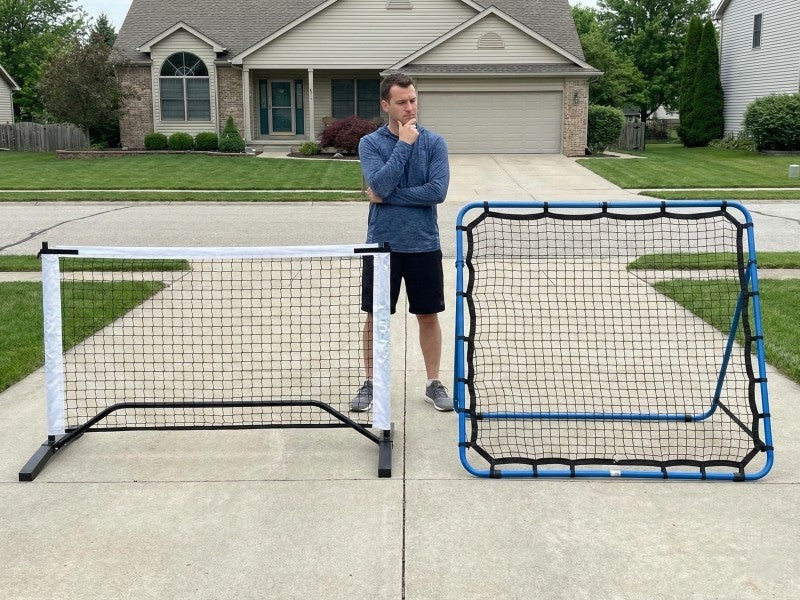
For players living in urban environments or those who only have a standard two-car garage to work with, a full 22-foot regulation net is physically impossible to set up. Franklin Sports recognized this spatial limitation and created a highly specific training tool.
- The Breakdown: The Franklin Half-Court Net is exactly what it sounds like: a 10-foot-wide net that sits at the regulation 34-inch center height. It features a sturdy steel frame and a simple slip-on net design.
- Indoor Performance: It performs excellently on concrete basement floors and garage epoxy. Because the span is only 10 feet, the net tension remains incredibly tight without the need for a complex fiberglass center post.
- Pros: The ultimate solution for "Skinny Singles" (half-court) practice; fits inside almost any garage or basement; excellent for drilling dinks and drop shots when it is raining outside.
- Cons: You cannot play a traditional game of doubles on this net; it is strictly a drilling and practice tool; requires purchasing indoor balls and paddles separately.

Frequently Asked Questions
Q1: Can I use an outdoor pickleball net inside?
Answer: Physically, yes, but practically, it is highly discouraged unless the manufacturer explicitly states it is safe for indoor use. Many dedicated outdoor nets use raw, heavy steel bases designed to withstand wind and rough asphalt. Dragging these bases across an indoor gymnasium floor will almost certainly cause deep scratches and gouges. Always ensure the net features flat, rubberized contact pads before bringing it inside.
Q2: Are indoor pickleballs softer than outdoor ones?
Answer: Yes. Indoor pickleballs (typically featuring 26 larger holes) are molded from a softer, more pliable plastic. Outdoor balls must be hard and heavy to resist wind deflection and withstand the abrasive friction of asphalt. Because indoor wood and synthetic floors are completely smooth, a hard outdoor ball will skid dangerously instead of bouncing. The softer indoor ball grips the smooth floor, providing a true, predictable bounce.
Q3: Will an indoor pickleball set scratch my hardwood floors?
Answer: A premium set engineered for indoor use will not scratch your floors. Systems like the SwiftNet or the Srikel Portable Indoor Set utilize specialized, non-marking rubber end caps that act as shock absorbers and friction pads. However, you must always ensure the floor is swept clean of dirt and debris before setting up the net; trapped grit underneath a rubber pad can act like sandpaper.

Leave a comment
This site is protected by hCaptcha and the hCaptcha Privacy Policy and Terms of Service apply.