


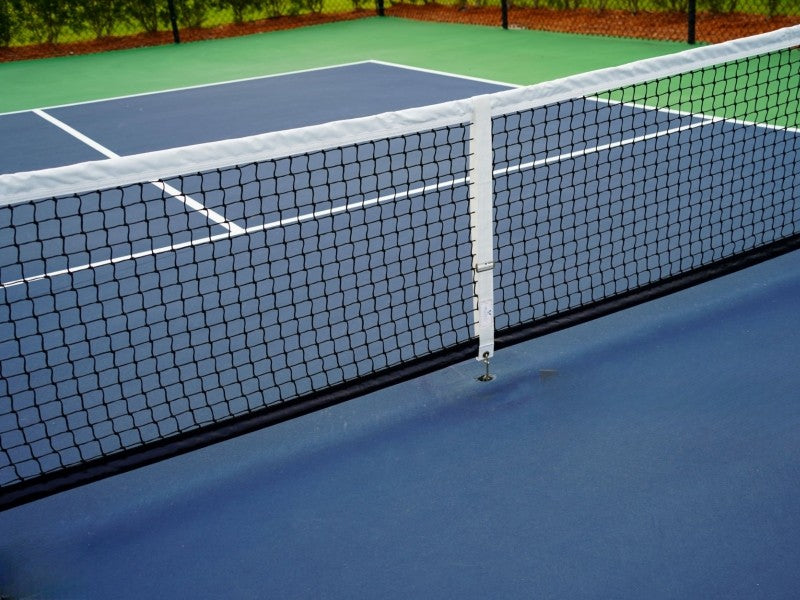
What’s the Best Portable Pickleball Net for You?
If you’re searching for the best portable pickleball net, your ideal choice depends on where, how often, and with whom you play.
- For backyard and casual play: A lightweight aluminum frame with a simple buckle tension system is ideal—affordable, easy to set up, and stable on flat ground.
- For travel or pop-up games: Go with a foldable or telescoping net under 20 lbs, with a compact carry bag and quick setup (under 5 minutes).
- For clubs or community centers: Choose a heavy-duty steel or hybrid frame with proper anchoring and adjustable net tension to handle daily use.
- For tournaments or regulated play: Ensure the net meets USAPA (USA Pickleball Association) standards—34 inches at the center and 36 inches at the posts—and has a ratchet or cable tensioning system for consistent height.
In short:
1. Lightweight + quick setup = best for travel.
2. Sturdy + tension adjustable = best for competition.
3. Weather-resistant + modular = best for long-term outdoor use.
2. Why Portable Pickleball Nets Are Worth It
Pickleball has exploded in popularity across the U.S. and globally, and not everyone has access to a permanent court. That’s where portable pickleball nets come in.
Key Benefits of Portable Nets
1. Flexibility and Mobility
2. Affordability
3. Space Optimization
4. Easy Maintenance
5. Accessibility for All
In short: portable pickleball nets make the sport more inclusive, flexible, and affordable—perfect for the growing global pickleball community.

3. Types of Portable Pickleball Nets and How They Work
Not all portable nets are made equal. The design, materials, and frame structure determine how well a net performs—especially in terms of stability, tension, and ease of setup. Below are the main categories and their characteristics.
3.1. Telescoping Frame Nets
These nets feature collapsible poles that slide into each other (like camera tripods).
Pros:
· Extremely compact and travel-friendly.
· Lightweight (typically 15–20 lbs).
· Fast setup (2–5 minutes).
Cons:
· Slightly less stable in wind.
· May lose tension over time if joints loosen.
3.2. Folding Frame Nets
Built with hinged metal frames, these are more robust than telescoping ones.
Pros:
· Excellent durability.
· Sturdy base—ideal for frequent outdoor play.
· Retains net tension better than telescoping designs.
Cons:
· Heavier (25–35 lbs).
· Larger folded footprint; less suitable for travel.
3.3. Pop-Up and Polymer Frame Nets
A newer design trend uses polymer or fiberglass rods that snap into shape—similar to camping tents.
Pros:
· Ultra-fast setup and lightest option available (10–15 lbs).
· No metal corrosion issues.
Cons:
· Less rigid; may sag in the center.
· Limited lifespan under heavy use.
3.4. Hybrid Portable Nets
Combining steel and aluminum or other composite materials, hybrid designs aim to balance weight and strength.
Pros:
· Strong yet not too heavy.
· Often includes advanced features (ratchet tension, wheels).
Cons:
· Pricier than entry-level designs.
4. Understanding Construction and Key Components
Knowing what each part of a portable net does helps you evaluate quality and performance before buying. Let’s break down the major components.
4.1. Frame Material
· Aluminum: Lightweight, rust-resistant, but less stable in strong wind.
· Steel: Strong and durable; heavier but excellent for outdoor and club use.
· Composite/Carbon Fiber: Premium option—lightweight and rigid, but higher cost.
Pro Tip: If you live in a coastal or humid area, choose powder-coated steel or aluminum to prevent corrosion.
4.2. Net Material
· Polyethylene (PE) mesh: Common in budget nets; decent for casual play.
· Nylon mesh: Offers superior strength and UV resistance.
· Vinyl-coated mesh: Best for outdoor or tournament-level use; resists fraying and moisture damage.
Look for double-stitched seams and reinforced top and bottom tapes—these keep the net’s shape even after months of play.
4.3. Tensioning System
This is where the “play feel” comes from—net tension affects the ball’s bounce and the realism of your practice.
· Simple buckle or rope systems: Found in affordable models. Easy to adjust but can loosen over time.
· Ratchet or crank systems: Offer precise tension control, ideal for tournaments.
· Cable systems: Common in heavy-duty nets—maintain consistent tension for months.
Pro Tip: For serious players, a ratchet or cable tensioning system gives the most consistent net height and performance.
4.4. Base and Stability
The base design determines how well the net stands in wind or uneven terrain.
· Weighted bases: Use sandbags or water tanks for stability—best for outdoor play.
· Wide feet with rubber pads: Prevent slipping on gym floors.
· Anchorable frames: Some heavy-duty nets allow stakes or pegs for soft ground.
If you play outdoors frequently, always check the wind rating or add ballast for safety.
4.5. Assembly and Portability
Ease of setup is critical—especially for players who move nets often.
Look for:
· Tool-free assembly: Quick-lock connectors or push-button joints.
· Carrying case with wheels: Makes transport effortless.
· Compact folded size: Under 40 inches long for easy car storage.
Average setup time for most modern portable nets is under 8 minutes, with some models taking less than 3.
4.6. Dimensions and Compliance
According to the USAPA regulation, a pickleball net should measure:
· Length: 22 feet
· Height: 36 inches at the posts, 34 inches at the center
Many cheaper nets fail to maintain this height consistently—especially without strong tensioning. If you plan to play competitively or train properly, buy a net that’s USAPA or IFP compliant.

4.7. Weather Resistance
Pickleball is often played outdoors, so resistance to weathering is key.
· UV-protected nets won’t fade or weaken under sunlight.
· Rustproof frames extend service life.
· Drain holes or vented designs prevent water buildup in poles.
A small investment in weatherproof features can double your net’s lifespan.
4.8. Price vs. Quality
Portable pickleball nets generally fall into three price categories:
|
Type |
Typical Price Range |
Ideal User |
|
Budget (≤$150) |
Simple buckle-tension, aluminum frame |
Backyard/casual players |
|
Mid-range ($150–$400) |
Stronger frame, better tension system |
Regular players, schools, coaches |
|
Premium ($400+) |
USAPA compliant, steel or hybrid frame, pro-level tension |
Clubs, tournaments, long-term outdoor setups |
Remember: a higher price doesn’t just buy durability—it often buys consistency in play and ease of setup.
5. Comparing Key Features: What Really Matters When Buying
When browsing online or in stores, you’ll see dozens of nets with similar appearances but vastly different performance. Let’s break down the most important criteria—so you can buy smart.
5.1. Regulation Size and Height
· Always confirm that the center height is 34 inches. Some budget nets dip after a few weeks of use.
· Adjustable posts help maintain consistent tension over time.
· For coaching or youth play, adjustable-height nets can double as mini-tennis or badminton nets—adding value.
5.2. Weight and Portability
· Under 20 lbs: Ideal for travelers, pop-up events, and indoor use.
· 20–30 lbs: Balanced option—sturdy yet movable.
· 30 lbs+: Suited for club or permanent semi-fixed installations.
Tip: If portability is your top priority, check the packed dimensions—some nets fold to 3 feet long, while others exceed 5.
5.3. Frame Strength and Stability
A well-built frame ensures your net doesn’t wobble, lean, or collapse.
· Check for crossbars or horizontal stabilizers—they distribute load evenly.
· Frames with wider bases offer more stability on uneven ground.
· Look for rubber feet to protect indoor flooring and prevent sliding.
5.4. Ease of Assembly
A portable net isn’t really portable if setup takes 20 minutes.
· Tool-free assembly saves time and prevents lost hardware.
· Models with numbered poles or color-coded joints simplify reassembly.
· One-person setup should be possible for most designs under 25 lbs.
5.5. Net Tension and Play Quality
Loose nets change gameplay dramatically—the ball reacts differently on rebounds.
· Choose a model with a tension cord or cable that keeps the center taut.
· Top-tape design: Double-stitched vinyl tapes keep height consistent.
· If you often play outdoors, consider crank-style or ratchet systems for long-term reliability.
6. Matching the Right Portable Pickleball Net to Your Needs
Not all players have the same requirements. Whether you’re a weekend hobbyist or a competitive club player, the right portable net can make or break your playing experience. Below is a breakdown of use cases, examples, and buying tips to help you pick the perfect match.
6.1. For Home and Backyard Players
If you’re setting up a casual court in your driveway or backyard, you’ll want:
· Lightweight aluminum frame (≤20 lbs)
· Simple buckle or rope tension system
· Compact carry bag for easy storage
Recommended Features:
· Weather-resistant mesh
· Anti-slip rubber feet
· Quick assembly under 5 minutes
Why: You’ll likely set up and take down the net frequently, so portability and convenience matter more than heavy-duty strength.
6.2. For Clubs and Community Centers
If multiple people use the net daily, prioritize durability and compliance.
Recommended Features:
· Powder-coated steel or hybrid frame
· Reinforced netting with vinyl tape
· Ratchet or cable tension system
· Regulation size (34” center / 36” posts)
Why: These nets must endure constant setup, teardown, and movement while maintaining regulation height.
6.3. For Tournament Use
Tournament organizers or competitive players need pro-level quality.
Recommended Features:
· USAPA or IFP certified dimensions
· Heavy-duty frame with stabilizing center support
· Steel construction or composite reinforcement
· Ratchet or crank tension adjustment
· Wheels for mobility between courts
Why: Tournament play demands perfect net height, tight tension, and stability in wind.
6.4. For Traveling or Pop-Up Play
If you play at different locations—parks, gyms, or vacation spots—your net must pack small and set up fast.
Recommended Features:
· Telescoping or folding frame (≤15 lbs)
· Compact carry bag (under 3.5 ft long)
· Quick-release joints
· UV-resistant nylon mesh
Why: Travel nets trade off some stability for speed and portability—but quality models hold up surprisingly well.
6.5. For Schools and Training Centers
Schools need nets that handle rough, daily use while remaining safe and easy to move.
Recommended Features:
· Powder-coated steel frame
· Wide base with safety caps on feet
· Replaceable netting
· Tool-free assembly
Why: Students and beginners tend to bump or lean on nets—so stability and replaceable parts are crucial.

Leave a comment
This site is protected by hCaptcha and the hCaptcha Privacy Policy and Terms of Service apply.