


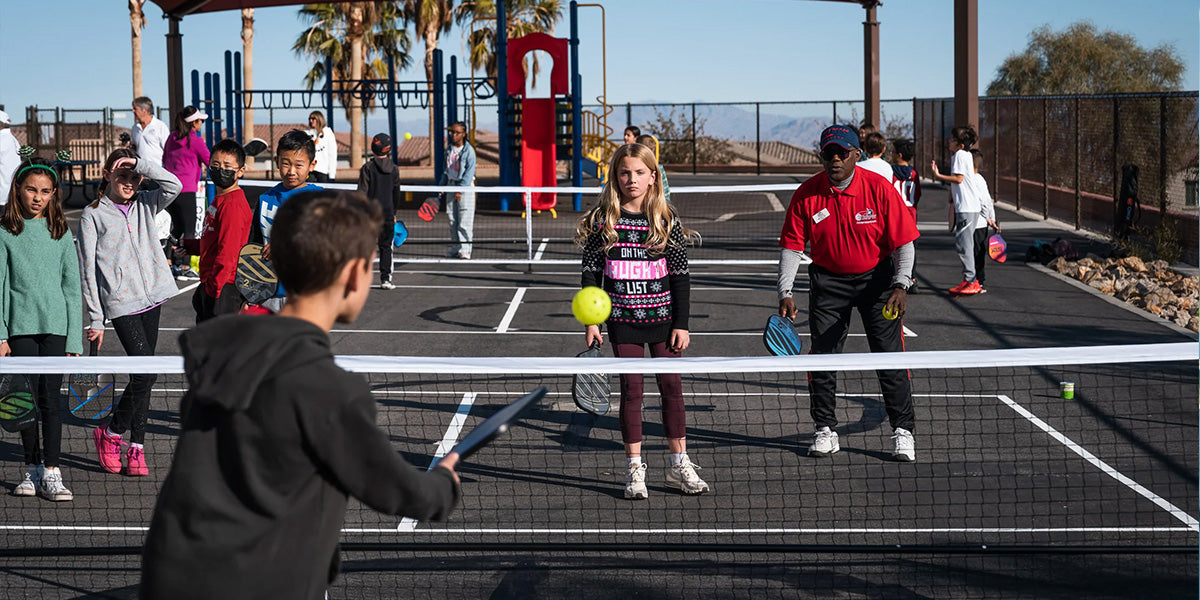
Pickleball is no longer just the fastest-growing sport in America—it's the fastest-growing job market in recreational sports. Courts are being painted on old tennis surfaces and gym floors faster than they can be staffed. This creates a massive gap:there are players everywhere, but not enough qualified people to teach them.
If you’ve ever thought,"I love this game, and I could probably show a beginner how to dink," you are exactly who the industry is looking for.
Here’s the reality check you’re probably searching for: You do not need to be a 5.0 tournament champion to start coaching. Whether you're a 3.5-level enthusiast looking for a weekend side hustle, a retired tennis pro eyeing a transition, or a PE teacher wanting to add a new unit to your curriculum, this guide maps out the exact path from enthusiast to certified instructor.
We’ll skip the fluffy marketing talk. This is the real, step-by-step roadmap covering skills, the big three certification bodies, insurance realities, and exactly how to get your first paying student.
What Does a Pickleball Instructor Actually Do?
Before you pay for a certification workshop, it’s worth understanding the job description beyond "hitting balls back and forth."
A pickleball instructor’s day varies wildly depending on the venue. You might be:
- Running a clinic at a community center: Teaching a group of 8 retirees the rules of the Non-Volley Zone (The Kitchen).
- Private coaching: Breaking down a 4.0 player’s backhand roll volley frame-by-frame.
- Working at a school: Introducing the sport to 30 energetic middle schoolers with zero hand-eye coordination experience.
The Skills That Matter More Than Your Backhand:
- Communication: You need to explain the concept of "soft hands" in three different ways because "feel it" doesn't work for most people.
- Feeding & Drilling: A great coach knows how to structure a drill to maximize reps. Standing around watching a game of skinny singles isn't coaching.
- Patience & Energy: You are part instructor, part therapist, and part DJ. The vibe you bring to the court determines if that student comes back next week.
Do You Need a Rating of 4.0+?
Not necessarily. For teaching beginners (2.0–3.0) , a solid 3.5 player who can demonstrate proper form consistently is often more effective than a pro who only wants to blast drives. Beginners need clear, repeatable mechanics, not power. However, if you plan to coach advanced players, you will eventually need the playing credentials to back up the advice.

Do You Need Certification to Teach Pickleball?
This is a high-volume search question for a reason. Let's give the honest, unfiltered answer.
Legally? No.
You can walk into any public park with a "Free Pickleball Lessons" sign and start teaching today. There is no state licensing board for pickleball coaching.
Professionally? Absolutely. Here’s the difference.
|
Without Certification |
With Certification (PPR/IPTPA/PCI) |
|
Liability Exposure: You are personally on the hook if a student trips over a ball and breaks a wrist. |
Coverage: You get access to group liability insurance policies (often up to $6M coverage). |
|
Venue Access: Parks & Rec departments will ask for your insurance certificate. Without it, you're stuck on public courts with no reservation rights. |
Professional Access: You can rent gym space, work for clubs, and get listed on official "Find a Coach" directories. |
|
Earnings Cap: You'll struggle to charge more than $20/hr. |
Earnings Potential: Certified coaches command $50–$80+ per hour for private sessions. |
Why It Matters: Certification isn't just about learning new drills (though you will learn plenty). It’s about risk management and credibility. For the investment of a couple hundred dollars and a weekend of training, you turn a hobby into a legitimate, insurable small business.
Step-by-Step Guide to Becoming a Certified Pickleball Instructor
Let's walk through the timeline. Most people can complete this journey from initial interest to teaching their first paid lesson in 4 to 6 weeks.
Step 1: Hone Your Foundation (The 3.5 Benchmark)
You don't need to win medals, but you need to be accurate.
- Goal: Play at a 3.5 level consistently. This means you understand court positioning, you can sustain a dink rally of 20+ shots, and you know the difference between a 2 and a 3.
- Action Item: Film yourself playing three games. Watch it back and ask: Would I want to learn that serve motion from me? Clean up any jerky, injury-prone mechanics before you try to teach them.
Step 2: Obtain CPR and First Aid Certification
Before you even log into a certification portal, get your Adult CPR/AED certification from the Red Cross or American Heart Association. This is a hard requirement for both PPR and IPTPA workshops. You cannot attend the in-person portion without uploading this certificate.
Step 3: Choose Your Certification Program (The Big Three)
This is where most people get stuck. Here is the clearest breakdown of the three major players in the US coaching space.
|
Feature |
PPR (Professional Pickleball Registry) |
IPTPA (Int'l Pickleball Teaching Pro Assoc) |
PCI (Pickleball Coaching International) |
|
Best For |
The "Industry Standard" coach seeking insurance and club jobs. |
Former pro players or those wanting a very structured, high-level methodology. |
Coaches who are busy and need 100% online flexibility. |
|
Format |
Online Course + 6-8 Hour In-Person Workshop |
12 Hours Online + 4 Hour Live Assessment + Exam |
100% Online, Self-Paced |
|
Cost (Approx.) |
$147–$247 (Workshop) + $325 (Annual Dues) |
$250 (Training) + $140 (Annual Dues) |
Varies by package; generally one-time purchase. |
|
Insurance |
$6 Million Liability included in membership. |
Access to group insurance rates. |
Referral options for independent insurance. |
|
The Vibe |
Corporate/Professional. The biggest name in the space. |
Players' Coach. Founded by top pros. |
Flexible/Modern. USA Pickleball partner. |
How to Decide Quickly:
- Want to work at a country club or public park? Get PPR Level 1. It's the most requested credential by employers.
- On a tight budget but want the best teaching methodology? Go IPTPA Level I. Their drills are excellent.
- You live far from any major city or have a chaotic schedule? Go PCI. You can finish the course at 2:00 AM in your pajamas.
Step 4: Attend the Workshop and Pass the Test
Whether virtual or in-person, the assessment boils down to two parts:
1. The Written Exam: Know the rulebook. Specifically, know the nuances of Non-Volley Zone faults, service sequence in doubles, and "out" calls.
2. The Live Teaching Demo: You will be asked to teach a specific skill to the group (e.g., "Teach the group the third shot drop progression"). They aren't looking for a perfect drop from you; they are looking at how you structure the lesson, how you correct errors, and how safe you keep the environment.
Step 5: Handle the Admin (Insurance & Dues)
Once you pass, you'll pay your annual membership dues. Do not skip the insurance step. The moment you accept a dollar for a lesson, you are a business. The PPR's $6M liability policy is the gold standard and worth the annual fee alone for peace of mind.

How Much Do Pickleball Instructors Make? (Real Numbers)
This is the section everyone scrolls to. Let's cut through the "six-figure" hype and look at realistic 2026 earnings.
- The Average Hourly Rate: For a certified coach in a mid-sized city, the going rate is $45 – $65 per hour for a private lesson.
- Group Clinics: Charging $20–$25 per person for a 90-minute clinic with 8 people nets you $160–$200 per session.
-
Annual Income Reality:
Part-Time Side Hustle: 5-10 hours per week. $12,000 – $25,000/year.
Full-Time Club Pro: 30-40 hours on court + admin. $55,000 – $80,000+/year.
The 80% Rule: Keep an eye on platform fees. Some facilities take 20-30% of your lesson fee in exchange for court time. If you are a mobile coach with your own net, you keep 100% of the fee.
Essential Skills That Separate Good Coaches From Great Ones
You can have every certification on the wall and still lose students if you lack these two things:
1. The Ability to Structure a 60-Minute Lesson.
Bad: Hitting balls randomly for 45 minutes.
Good: Warm-up (Dinks) -> Review (Previous Mistake) -> New Skill (Introduction & Drill) -> Game Application (Situational Play) -> Cool Down.
2. Selective Hearing.
Beginners will tell you they want to learn a "scorpion overhead." They don't. They need to learn not to stand in the middle of the court. A great coach ignores the shiny object requests and fixes the foundation first.
What Equipment Do You Need to Start Teaching? (The Coach's Bag)
You cannot rely on the facility to have good gear. If you show up prepared, you look like a pro. If you show up empty-handed, you look like a hobbyist.
Here is the essential kit for a new mobile instructor:
- The Net: This is non-negotiable. Half the courts in America are just tennis courts with extra lines. You need a portable system that sets up fast so you don't waste the first 15 minutes of a paid lesson wrestling with metal poles. Look for something like the FlashCourt 3.0—a design that prioritizes a 2-minute setup means you spend more time coaching and less time sweating before the client arrives.
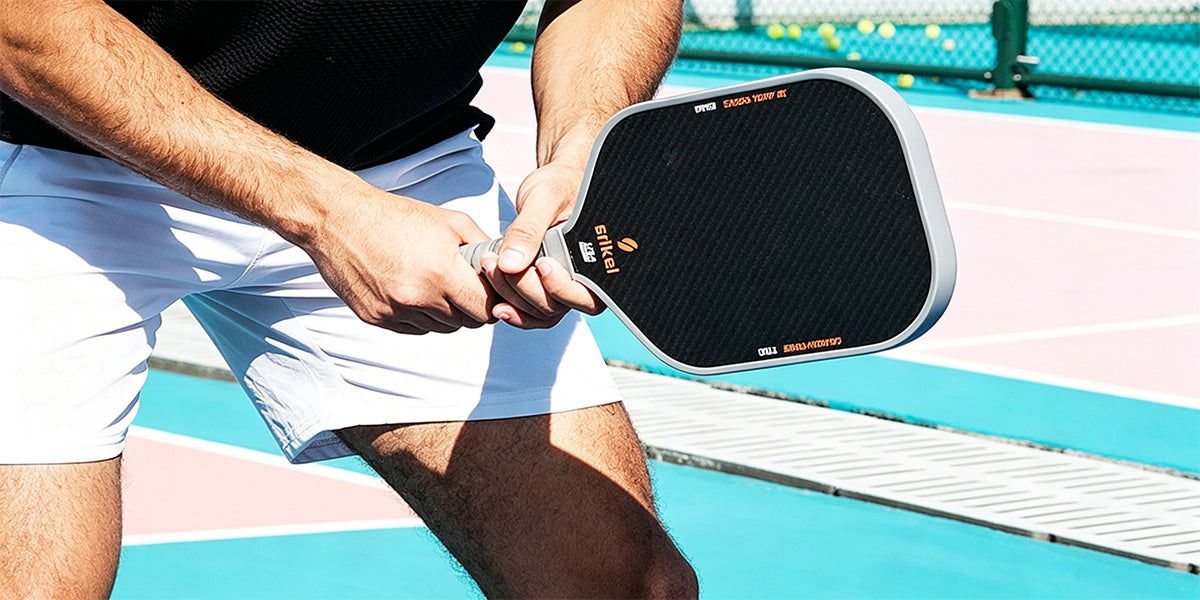
- The Paddles: Keep two loaner paddles in your bag for students who show up with a wooden paddle from a garage sale. You want a control-oriented, durable paddle that won't destroy their elbow. Aura Pro or similar carbon fiber surfaces are ideal for teaching touch without being too poppy for beginners.
- The Balls: Outdoor balls (like XS-40) are the standard. Buy a sleeve of 100. They crack. You will go through them. It's a business expense.
How to Get Your First 5 Paying Students
This is the hardest step. Certification gives you the paper; marketing gives you the paycheck.
The 90-Day Launch Plan for New Coaches
|
Phase |
Timeline |
Action Items |
|
Foundation |
Days 1-7 |
Get CPR certified. Buy your portable net and a case of balls. Film a 30-second intro video of yourself playing (keep it fun, not intense). |
|
Certification & Beta Test |
Days 8-30 |
Register for PPR/IPTPA workshop. Crucial Move: Offer 3 Free Lessons to friends in exchange for Video Testimonials. You need social proof more than you need $45 right now. |
|
Productize |
Days 31-60 |
Launch a "4-Week Beginner Bootcamp" for a flat fee ($120/person). This is easier to sell than one-off lessons. Post the schedule on local Facebook Community Groups. |
|
Scale |
Days 61-90 |
Start a waitlist. Use your student testimonials to pitch a recurring weekly class at the local YMCA or community center. |
Use the Nextdoor App. It is the most underrated platform for finding pickleball beginners. A post saying, "Certified instructor offering a Saturday morning intro clinic for new players. Paddles provided," will fill up faster than you think.

Conclusion: The Court Is Waiting
Becoming a certified pickleball instructor is one of the most accessible and rewarding entries into sports coaching. The barrier to entry is low, the community is welcoming, and the demand for quality instruction has never been higher.
Follow the steps:
1. Dial in your 3.5 skills.
2. Get your CPR card.
3. Pick the certification that fits your budget and schedule (PPR, IPTPA, or PCI).
4. Get the right gear (especially a reliable, fast-setup net).
Don't wait until you feel "ready" to teach the perfect third shot drop. You'll learn more in your first 10 hours of coaching than in 100 hours of playing. Get out there, get certified, and help the next wave of players find their love for the kitchen line.
Ready to gear up for your first lesson? Check out Srikel’s professional-grade nets and coaching equipment here.

Leave a comment
This site is protected by hCaptcha and the hCaptcha Privacy Policy and Terms of Service apply.