


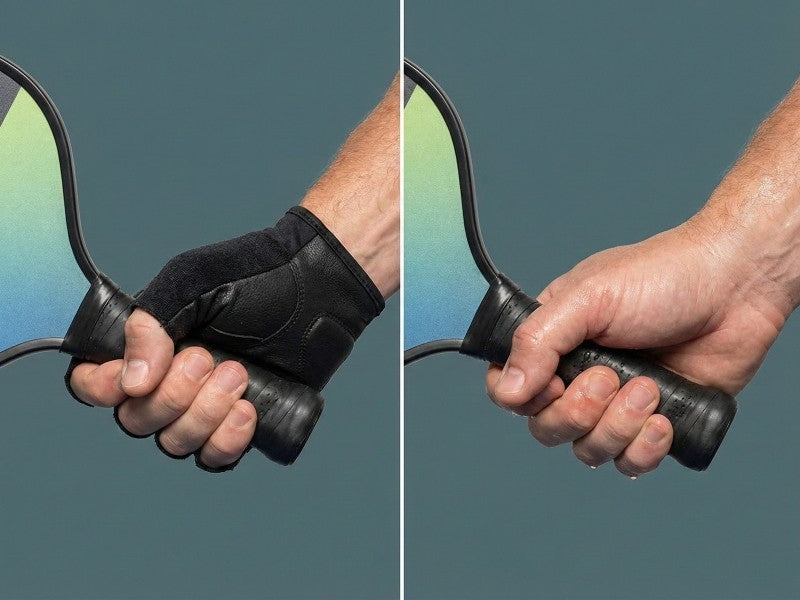
Step onto any busy pickleball court, and you will immediately notice the diverse array of equipment and apparel. Yet, when you look at their hands, you will notice a stark divide. Some players are constantly wiping their bare hands on their shirts, applying liquid chalk, or adjusting athletic tape over raw blisters. Others, however, are confidently stepping up to the baseline wearing specialized gloves. This observation brings us to a highly debated topic within the sport's rapidly growing community: the use of gloves for pickleball.
The decision to wear a glove is rarely a mere fashion statement or a simple matter of preference. It is a highly specific, tactical choice driven by a player's individual physiology (such as excessive perspiration rates or skin sensitivity), the climate they play in, and their overarching mechanical style.
Why Hands Suffer
To truly understand why a player might require gloves for pickleball, we must first examine the intense biological and physical forces applied to the human hand during a standard match.
The Friction Factor: Blisters and Calluses
Pickleball requires a dynamic grip. Within a single rally, a player might shift from an Eastern forehand grip for a driving serve return, to a Continental grip for a series of rapid dinks, and finally to a Western grip for an aggressive topspin roll.
Every time you shift your grip, and every time you strike the ball, microscopic shifts occur between the polyurethane overgrip of your paddle and the dermal layers of your hand. This generates shear force. When this shear force is applied repeatedly over a two- or three-hour playing session, the friction separates the upper layer of the skin (the epidermis) from the lower layers. Fluid rushes into this space to protect the underlying tissue, resulting in a painful friction blister.
Even if a blister does not form, the constant abrasion forces the body to build up thick, hardened layers of dead skin—calluses. While calluses offer some natural protection, they can dry out, crack, and become highly painful, especially at the base of the index finger and the fleshy pad of the palm (the hypothenar eminence), which absorb the most friction during paddle rotation.

Moisture Management: The "Sweaty Hand" Dilemma
The human palm contains a massive concentration of eccrine sweat glands. During a high-intensity cardiovascular activity like pickleball, the body's thermoregulatory system goes into overdrive, pumping moisture directly onto the surface of your hands.
This creates a severe biomechanical dilemma. The primary requirement for a secure grip is a high coefficient of friction between your hand and the paddle handle. Sweat acts as an incredibly efficient lubricant, drastically lowering that friction coefficient.
When your hand begins to slip, your brain subconsciously signals your forearm muscles (the flexor digitorum superficialis and profundus) to clamp down and grip the paddle tighter to compensate for the lack of traction. This "death grip" is one of the leading causes of premature forearm fatigue and poor shot execution. When your forearm is perfectly rigid, you lose the crucial wrist snap required for topspin and the fluid mobility needed for delicate drop shots.
Impact Vibration and Hand Fatigue
Modern pickleball paddles are essentially rigid composite boards. When a hard plastic ball traveling at 40 to 60 miles per hour strikes the face of a paddle, it generates a high-frequency shockwave.
If you hit the ball perfectly within the paddle's "sweet spot," this vibration is minimized. However, pickleball is a game of rapid reactions, and off-center hits (strikes near the edge guard or the throat of the paddle) are inevitable. An off-center strike causes the paddle to violently twist in your hand—a physical force known as torque.
Resisting this torque requires immense finger and grip strength. The shockwaves from these impacts travel directly from the paddle's core, through the handle, into the small phalangeal joints of your fingers, and up through your wrist. Over thousands of hits, this repetitive micro-trauma leads to deep muscular fatigue, joint aching, and inflammation in the connective tissues of the hand.
The Pros of Wearing Gloves for Pickleball
Having established the hostile mechanical and environmental conditions the hand faces during a match, we can now objectively evaluate the benefits of introducing a protective barrier. Wearing gloves for pickleball provides several distinct, measurable advantages that directly address the biomechanical challenges outlined above.
Enhanced Grip Security and Paddle Control
The most immediate and profound benefit of wearing a glove is the absolute stabilization of your grip. High-quality sporting gloves are engineered with materials—such as specially tanned Cabretta leather or advanced synthetic microfibers—that maintain a remarkably high coefficient of friction even when subjected to moisture.
When a tacky leather glove interface meets a tacky polyurethane paddle grip, they effectively lock together. This creates a mechanical advantage:
1. Elimination of Torque: On off-center strikes, the paddle is significantly less likely to twist in your hand. This results in fewer unforced errors and popped-up balls caused by the paddle face opening upon impact.
2. Relaxed Forearm Tension: Because the glove provides the necessary traction, the player no longer needs to rely on a tight "death grip." You can hold the paddle loosely (often described as a 3 or 4 out of 10 in grip pressure), which allows for maximum wrist whip, better topspin generation, and significantly faster hand speed during kitchen-line firefights.
Ultimate Blister Prevention and Skin Protection
For players who suffer from chronic blistering, sensitive skin, or conditions like eczema that are aggravated by sweat and friction, a glove is nothing short of a medical necessity.
A glove acts as a second skin, absorbing 100% of the shear force generated during grip transitions and ball impacts. The friction occurs between the outside of the glove and the paddle handle, leaving the epidermis of the hand completely undisturbed. This allows players, particularly heavy drillers, instructors, and tournament competitors who spend upwards of 20 hours a week on the court, to play completely pain-free without relying on cumbersome athletic tape or messy liquid bandages.
Weather Adaptability: Thermal and UV Defense
Pickleball is increasingly becoming a year-round, outdoor sport, meaning players must contend with extreme environmental variables. Gloves are highly versatile tools for weather management.
- Winter Play and Joint Health: Playing in temperatures below 50°F (10°C) introduces severe physiological challenges. Cold weather causes the synovial fluid in your finger joints to thicken, making your hands feel stiff and unresponsive. Furthermore, striking a hard, cold plastic ball transfers a jarring, painful sting into cold hands. Thermal, fleece-lined, or windproof gloves retain body heat, keeping the joints lubricated, maintaining finger dexterity, and absorbing the painful sting of winter impacts.
- Summer Play and UV Protection: Conversely, playing under the blazing summer sun exposes the back of the hands to intense ultraviolet radiation. The hands are one of the most common, yet frequently neglected, areas for serious sun damage and premature skin aging. Lightweight, highly breathable UV-blocking gloves protect the skin from harmful rays while actively wicking sweat away from the palm, cooling the hand through evaporation.
Micro-Vibration Dampening for Joint Health
While a glove is not a replacement for a properly constructed, vibration-absorbing paddle or a dedicated shock-absorbing overgrip, it does add an additional layer of material density between the rigid paddle handle and your skeletal structure.
The Cons: Why Some Players Avoid Gloves for Pickleball
To provide a truly objective and authoritative analysis, we must address the other side of the debate. If gloves for pickleball offer such profound physical protection, why doesn't every professional on the PPA or APP tour wear one? The answer lies in the highly sensitive mechanics of the "soft game" and the physics of paddle sizing.
Loss of Tactile Sensation and "Touch"
Pickleball is a game of extreme contrasts. You transition from swinging with maximum rotational force at the baseline to executing feather-light dinks at the Non-Volley Zone (the Kitchen) within seconds.
Executing a perfect drop shot or an unattackable dink relies heavily on proprioception—your body's ability to sense movement, action, and location. When a ball strikes the paddle face, micro-vibrations travel into your fingertips. Your brain instantly processes this tactile feedback to gauge how hard you hit the ball and adjust the angle for the next shot.
A glove, no matter how thin, introduces a layer of dampening material between your nerve endings and the paddle handle. For highly advanced players, this "muffled" sensation can make the paddle feel disconnected from the hand, leading to slight miscalculations in power and touch. This is the primary reason many purists refuse to cover their hands.

The Grip Size Alteration Effect
This is a critical biomechanical factor that many players overlook. Every pickleball paddle has a specific grip circumference (usually ranging from 4.0 inches to 4.375 inches).
When you put on a leather or synthetic glove, you are effectively adding anywhere from 1/16 to 1/8 of an inch to the total diameter of the handle you are gripping.
· The Danger of a Too-Large Grip: If a grip becomes too large for your hand, it severely restricts your wrist's range of motion (flexion and extension). A restricted wrist makes it incredibly difficult to snap over the ball for topspin or flick the ball during a fast-paced kitchen volley. Furthermore, a grip that is too large forces the extensor muscles in your forearm to work much harder to stabilize the paddle, ironically increasing the risk of the very tennis elbow you might be trying to prevent.
Heat Retention in Extreme Summer
While we mentioned that some gloves offer UV protection and moisture-wicking properties, the physical reality is that adding a layer of material over your hand traps body heat. In environments with 90°F+ (32°C+) temperatures and high humidity, a glove can become a localized sauna. If the glove is not exceptionally well-ventilated, the trapped sweat can lead to skin maceration (the softening and breaking down of wet skin), making the hand highly uncomfortable and prone to fungal infections.
How to Choose the Perfect Gloves for Pickleball (Buyer’s Guide)
Selecting the right glove requires a strategic approach. Do not simply buy the first athletic glove you see. Follow this step-by-step protocol to ensure optimal fit and function.
1. The "Second Skin" Fit Rule
A pickleball glove must fit significantly tighter than a winter driving glove. If there is any excess material bunching up in the palm or at the tips of the fingers, the glove will slide against your skin during a hard swing. This internal sliding completely negates the purpose of the glove and will actually cause blisters rather than prevent them.
· How to Test: When you put the glove on and strap it tight, you should have to gently work your fingers into the slots. When you make a fist, the material across the back of your hand should be taut, but not restricting your blood circulation.
2. Factoring in Your Paddle's Grip Circumference
As discussed in the "Cons" section, a glove increases your grip size. If your paddle handle currently feels perfectly sized in your bare hand, adding a glove will make it feel too bulky.
· The Pro Adjustment: If you decide to commit to wearing a glove, consider stripping off the aftermarket "overgrip" on your paddle, or replacing the thick factory cushion grip with a much thinner replacement grip. This physical adjustment compensates for the thickness of the glove, keeping your overall grip circumference optimal for your hand size.
3. Single vs. Double Gloves: Which is Right for You?
· The Single Glove: Most players (similar to golfers) only wear a glove on their dominant playing hand, as this hand absorbs 100% of the friction and torque.
· The Double Glove: If you heavily utilize a two-handed backhand drive or roll, the fingers of your non-dominant hand are exposed to significant friction against the upper throat of the paddle. In this case, purchasing a pair of gloves is a wise investment. Additionally, in freezing weather, a pair is necessary for thermal protection.

Leave a comment
This site is protected by hCaptcha and the hCaptcha Privacy Policy and Terms of Service apply.